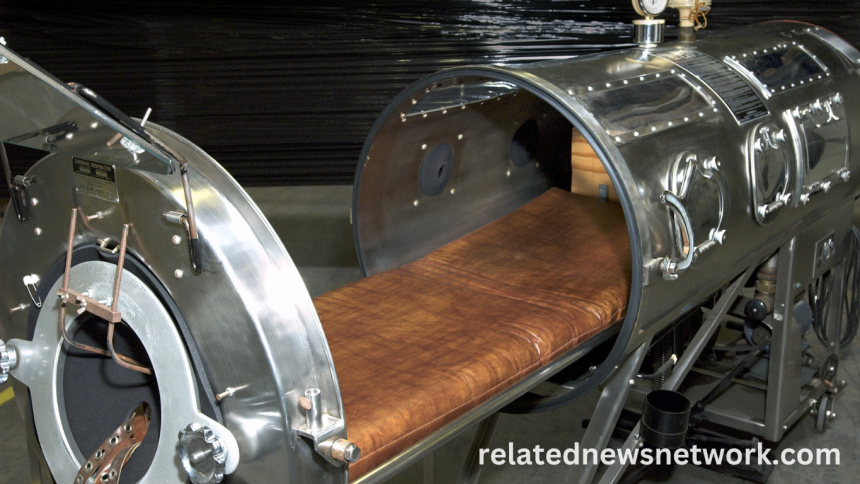
The iron lung, also known as a negative pressure ventilator, is a large, cylindrical medical device designed to help individuals breathe when their respiratory muscles are unable to function properly. Originally developed in the early 20th century, it became widely recognized during the mid-1900s, especially during the polio epidemics when thousands of people—particularly children—suffered from paralysis that affected their breathing muscles.
This life-saving machine was not merely a tool of convenience; it was a vital necessity for many who otherwise could not draw breath on their own. To understand its importance, it’s essential to explore its mechanical design and physiological function in depth.
Historical Context and the Rise of the Iron Lung
In the 1920s and 1930s, outbreaks of poliomyelitis led to a surge in demand for artificial respiratory support. The disease, caused by the poliovirus, frequently attacked the spinal cord, damaging nerves that controlled muscle movement—including those responsible for breathing. Invented in 1928 by Philip Drinker and Louis Agassiz Shaw, the first practical version of the iron lung was a game-changer in respiratory medicine. Initially powered by hand-operated bellows, these machines were soon upgraded with electric motors, allowing hospitals to care for more patients with greater efficiency.
The widespread use of the iron lung peaked during the 1940s and 1950s. Images of hospital wards lined with rows of these machines became an iconic and haunting representation of the polio crisis. At the height of the epidemic, thousands of patients were dependent on iron lungs, often for weeks, months, or even years.
Read More : What Science Says About Sanpaku Eyes
How the Iron Lung Works: The Mechanics of Breathing Assistance
The core principle behind the iron lung lies in the concept of negative pressure ventilation. Unlike modern ventilators, which push air directly into the lungs through a tube inserted into the windpipe (positive pressure), the iron lung works externally to mimic natural breathing.
The patient lies flat inside the machine, with only their head protruding from the device. A rubber gasket seals the neck area to maintain an airtight environment. The iron lung’s motor then begins to create rhythmic changes in air pressure inside the chamber.
When the pressure inside the tank decreases, the chest wall is pulled outward, expanding the lungs and allowing air to flow in. As the pressure rises back to atmospheric level, the chest is compressed, pushing air out. This cycle of pressure variation simulates the action of the diaphragm and intercostal muscles, effectively breathing for the patient.
The Role of the Iron Lung in Critical Care
The invention and application of the iron lung marked a significant advancement in intensive care and mechanical ventilation. It demonstrated the possibility of sustaining life through external respiratory assistance and laid the groundwork for modern ventilators. While bulky and cumbersome, the device allowed patients to remain conscious, speak, and eat while receiving respiratory support—unlike later methods requiring intubation or sedation.
Despite its effectiveness, the iron lung was not a permanent solution for everyone. Some patients recovered the ability to breathe independently, while others required lifelong assistance. In rare cases, individuals have used the iron lung for decades, adapting to life within the confines of the machine.
Evolution and Decline of the Iron Lung
As medical technology evolved, the use of the iron lung declined sharply. The introduction of portable, more efficient positive pressure ventilators in the 1960s and the development of vaccines that nearly eradicated polio in many parts of the world rendered the iron lung largely obsolete.
Today, the device holds more historical significance than medical utility. Only a handful of units remain in use, maintained by dedicated engineers and caregivers. These rare instances highlight both the resilience of the human spirit and the ingenuity of early medical science.
Legacy and Impact on Modern Medicine
The iron lung’s contribution to medicine extends beyond its immediate application. It sparked new ways of thinking about artificial life support and inspired generations of biomedical engineers and physicians to develop safer, more compact, and more effective respiratory devices.
Moreover, it emphasized the need for holistic patient care, as iron lung users required not only mechanical support but also emotional, social, and physical assistance. This holistic approach continues to shape critical care practices in hospitals today.
The story of the iron lung remains a powerful reminder of how human innovation can rise to meet devastating challenges. It stands as a testament to perseverance—of patients, doctors, and inventors alike—who refused to surrender to the limitations of their time.
Frequently Asked Questions
What is an iron lung used for?
An iron lung is used to help patients breathe when their respiratory muscles are paralyzed or too weak to function.
How does an iron lung help with breathing?
It uses negative pressure to mimic natural breathing by expanding and contracting the chest from outside the body.
Who invented the iron lung?
The iron lung was invented in 1928 by Philip Drinker and Louis Agassiz Shaw at Harvard University.
What diseases required the use of an iron lung?
Polio was the primary disease associated with iron lung use, but it was also used for other conditions causing respiratory failure.
Is the iron lung still used today?
Very rarely. Most respiratory support today is provided by modern positive pressure ventilators, which are more compact and efficient.
How long did people stay in iron lungs?
Some patients used it for a few weeks, while others, in extreme cases, relied on it for decades.
Can a person talk or eat while inside an iron lung?
Yes, because the head remains outside the chamber, patients can speak, eat, and interact normally while inside.
What replaced the iron lung in modern medicine?
Modern ventilators that use positive pressure ventilation have replaced the iron lung in nearly all medical settings.
Conclusion
The iron lung was a groundbreaking invention that saved countless lives during the polio epidemics. Though largely replaced by modern technology, it remains a symbol of medical innovation and resilience. Its impact laid the foundation for modern respiratory care and intensive medicine, continuing to influence healthcare practices long after its prime.