
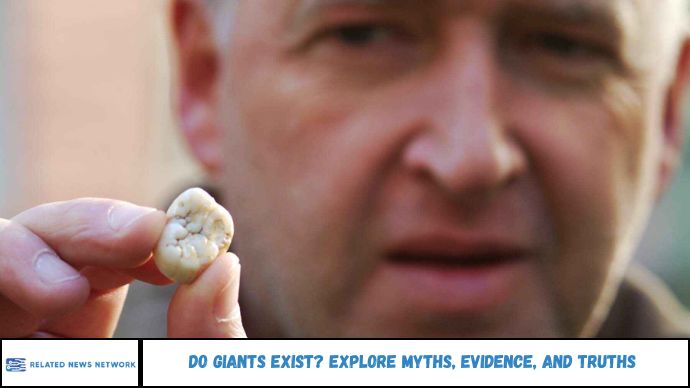
Do Giants Exist? Explore Myths, Evidence, and Truths Legends of giants stretch across cultures and continents. From the towering Nephilim of the Bible to the Cyclopes of Greek mythology, stories of oversized humans have fascinated and frightened for generations. But are they just myths—or could real-life giants have walked the Earth?
The idea of giants has captivated the human imagination for centuries. Across cultures and generations, tales of towering, powerful beings have echoed through ancient texts, oral traditions, and folklore. These colossal figures continue to stir our curiosity and inspire both awe and skepticism.
While many dismiss such stories as mere myth or symbolic storytelling, others wonder: Could there be truth behind the legends? Is there any scientific or historical evidence suggesting that giants—perhaps in some form—once walked the Earth?
Are Giants Real? What Does the Evidence Say?
The notion of humanlike giants towering 20 feet or more remains firmly in the realm of fiction. To date, there is no evidence that hominins—the group that includes modern humans and our ancestors—ever evolved to such extreme heights.
That said, there have been rare but notable exceptions. Certain individuals throughout history have reached extraordinary sizes due to medical conditions like gigantism, a disorder caused by an overproduction of growth hormone. This leads to continuous growth over a person’s lifetime.
One of the most famous examples is Robert Wadlow, often referred to as the “Alton Giant.” He holds the record as the tallest man ever measured, standing at an astonishing 8 feet, 11 inches (2.72 meters). While impressive, his condition came with severe health complications. Wadlow experienced limited sensation in his lower extremities and died at just 22 due to an infected blister that went unnoticed for too long.
1. Giants in Ancient Myths and Texts
Global Myths of Giants: A Universal Phenomenon
Nearly every ancient culture references giants:
- Biblical Giants: Nephilim and Anakim in the Old Testament
- Norse Giants: The Jotnar, enemies of the gods in Norse mythology
- Greek Cyclopes: One-eyed giants who built great structures
- Native American Lore: The Si-Te-Cah, a red-haired race of giants
- Hindu Epics: Rakshasas—giant beings with supernatural powers
These stories often describe beings that were strong, large, and long-lived, suggesting a shared human fascination with the idea of superhuman size and strength.
2. Archaeological Claims and Skeletal Discoveries
Controversial Finds and Hoaxes
Some alleged discoveries have fueled giant theories:
- “Giant skeletons” reportedly unearthed in the U.S. in the 19th century
- Claims of 12-foot-tall remains found in India, Mexico, and the Middle East
- Photos circulated online (many of which have been debunked as hoaxes or photo manipulations)
Despite these claims, no verifiable giant skeleton has been authenticated by mainstream archaeology.
Smithsonian Conspiracy Theory?
Some conspiracy theorists allege that the Smithsonian Institution destroyed giant skeletons to suppress historical truths. However, no credible evidence has ever confirmed this theory.
3. Real-Life Giants: The Science of Gigantism
The Biological Reality Behind Giant Legends
Gigantism is a rare medical condition caused by an overproduction of growth hormone, usually from a pituitary gland tumor.
Famous Examples:
- Robert Wadlow – The tallest man in recorded history at 8 ft 11 in (2.72 m)
- André the Giant – A famous wrestler and actor who suffered from acromegaly
- Suleiman Ali Nashnush – A Libyan basketball player, 8 ft 0.5 in tall
These cases show that unusually tall humans do exist, but not at the scale described in myths (10–30 feet tall).
4. Historical Structures Often Linked to Giants
Many ancient megastructures are attributed to giants in myths:
- Stonehenge (UK)
- Easter Island statues (Chile)
- Baalbek ruins (Lebanon)
While these structures are impressive, archaeologists attribute their construction to advanced engineering, not giant labor.
5. Genetic and Evolutionary Considerations
From an evolutionary standpoint:
- Extremely tall humans would struggle with bone density, blood circulation, and energy requirements
- There is no fossil evidence of a human species exceeding 9 feet tall regularly
Modern humans evolved within biological constraints that make long-term survival at extreme heights unlikely.
FAQs
1. Did giants ever exist?
No verified skeletal evidence supports the existence of mythic giants. Some tall individuals have existed due to medical conditions.
2. Are there any real human giants?
Yes. Conditions like gigantism cause abnormal growth, as seen in people like Robert Wadlow.
3. What do ancient texts say about giants?
Many texts, including the Bible and Greek myths, mention giants as powerful beings, though these are likely symbolic or exaggerated.
4. Have giant skeletons been found?
Numerous claims exist, but none have been verified by the scientific community. Most are hoaxes or misidentifications.
5. Could giants exist today?
Only in medical cases. Genetic and environmental factors make the existence of mythic-sized humans biologically implausible.
6. Why are giants in so many cultures?
Giants may symbolize fear, power, or the unknown, serving as metaphors in myths and oral traditions.
Conclusion
So—do giants exist? The evidence suggests that while real-life “giants” have walked among us, they are not the sky-scraping titans of legend. Ancient myths reflect human imagination, societal fears, and awe of the unknown, often wrapped in metaphor.
Scientific research and archaeological evidence support the existence of tall individuals, not entire races of 12-foot warriors. Still, the enduring tales of giants remind us of humanity’s endless curiosity about what lies beyond the ordinary.