
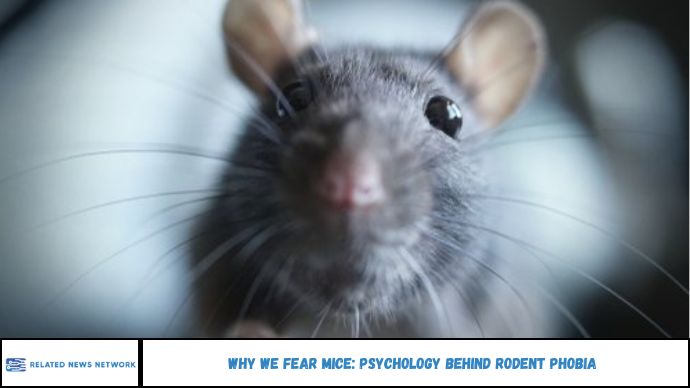
Fear of mice and other rodents is surprisingly common and deeply rooted in evolution, psychology, and culture. This article explores the science behind our aversion to rodents, from survival instincts and media portrayal to real health risks. Understanding these factors can help reduce irrational fear and promote healthier attitudes toward these misunderstood animals.
Despite their small size and largely harmless nature, mice and other rodents often trigger disproportionate fear. From cartoons where people scream at mice to real-life reactions of panic, our aversion seems almost instinctive.
Back in 2011, my husband and I moved into our first home—a cozy beach shack perched on wooden stilts just a few blocks from the ocean in South Carolina. It felt like a dream come true… until the marsh rats appeared. Bloated and bold, they skittered across the basement floor at all hours, their whiskers twitching, their sharp front teeth flashing, and their long, naked tails dragging behind them like something out of a nightmare. Even now, the memory gives me chills.
No matter how calm or easygoing you think you are, the moment a mouse or rat darts across the floor, instinct kicks in—and most of us scream. But why does this reaction feel so automatic? Is musophobia hardwired into our genes, or is it something we learn over time?
1. Evolutionary Fear: Survival Instincts in Action
Our ancestors had good reasons to avoid small, scurrying creatures.
Key insights:
- Mice and rats often lived in unsanitary conditions and were carriers of disease.
- Avoiding them may have enhanced survival, especially during historical pandemics like the Black Death, which was spread in part by fleas on rats.
- Rapid, unpredictable movement triggers the amygdala, the brain’s fear center.
A 2022 study in Scientific Reports found that humans react faster and more intensely to rodent-like movements than to other animals, suggesting a deeply wired response.
2. Rodents and Disease: A Legitimate Concern
Though not all rodents pose a threat, some species have historically carried dangerous pathogens.
Notable risks include:
- Hantavirus and Leptospirosis, transmitted through rodent urine or droppings
- Salmonella, spread by contact with contaminated surfaces
- Rat-bite fever, though rare, is a real concern in infested areas
Public health messaging over decades has emphasized cleanliness and pest control—further reinforcing the idea that rodents = danger.
3. Cultural Influence: From Cartoons to Horror Films
Popular media has long portrayed mice and rats as either adorable troublemakers or terrifying pests.
Cultural factors at play:
- Movies like Ratatouille soften their image, but horror and thriller genres (e.g., Willard, The Rats, Ben) push the fear narrative.
- Cartoons often exaggerate reactions for humor—think of people leaping onto tables at the sight of a mouse.
These portrayals shape how children and adults perceive rodents—associating them with chaos, contamination, or fear.
4. Psychology of Phobias: Musophobia Explained
The fear of mice and rats has a clinical name: musophobia.
What defines a phobia:
- Persistent, irrational fear that interferes with daily life
- Triggers can include seeing a rodent, hearing one, or even imagining one
- Often tied to learned experiences, like a traumatic encounter or watching others react fearfully
Cognitive Behavioral Therapy (CBT) and exposure therapy are effective treatments for specific phobias, including musophobia.
5. Social Learning: Fear Is Often Taught, Not Inherited
Many rodent fears aren’t innate—they’re learned from watching others.
How it happens:
- Children often mirror parents’ reactions; if a parent screams at a mouse, the child may internalize that fear.
- Schools, friends, and media reinforce rodent stereotypes.
A 2020 study in Psychological Science showed that observing fear in others can condition similar responses, even in the absence of direct experience.
6. How to Overcome Fear of Rodents
If your fear of mice or rats affects your comfort or daily life, you’re not alone—and you can change it.
Practical steps:
- Educate yourself about rodent behavior and biology to reduce irrational thoughts.
- Use gradual exposure, starting with pictures or videos and progressing at your own pace.
- Practice relaxation techniques during exposure to reduce anxiety.
- Seek professional help if the fear is severe or persistent.
FAQs
1. Why are people afraid of mice?
Because of evolutionary instincts, disease associations, and cultural conditioning.
2. What is musophobia?
Musophobia is an irrational, persistent fear of mice and rats.
3. Are mice actually dangerous?
Most house mice are not dangerous, but some rodents can carry diseases.
4. Can fear of rodents be learned?
Yes, many people learn to fear rodents by observing others or through media.
5. How do I stop being afraid of mice?
Gradual exposure, education, and therapy can reduce or eliminate the fear.
6. Is fear of rodents common?
Yes, it is one of the most widespread specific animal fears globally.
Conclusion
While mice and rodents are often feared, the truth is that much of our reaction is based on evolutionary reflexes, cultural narratives, and learned behavior rather than real, present-day threats.
By understanding the science and psychology behind the fear, we can start to dismantle the myths and emotional reactions associated with these creatures. Whether you want to overcom