
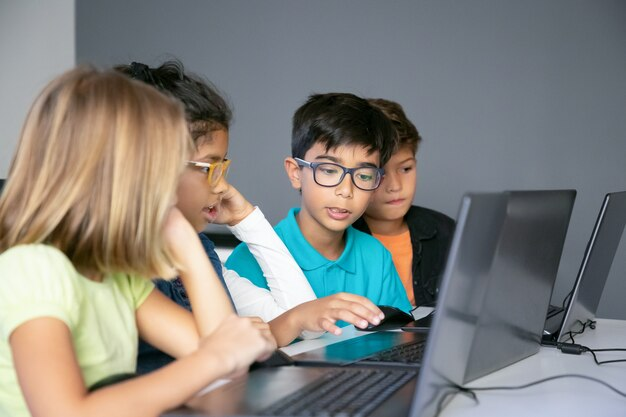
In this digital age, equipping children with coding skills is increasingly important. One of the most effective ways to do so is by enrolling them in coding classes for kids. These classes provide a structured environment where young learners can acquire the technical skills necessary to navigate and succeed in today’s technology-driven world.
The Advantages of Learning to Code Early
Introducing children to coding at an early age can enhance their problem-solving abilities. Coding requires a logical approach to a variety of challenges, helping children develop critical thinking skills that benefit various academic subjects.
Encouraging Creativity through Coding
Coding is not just about learning programming languages; it’s also a form of creative expression. By learning to code, children can create their own games, stories, and animations, turning their ideas into something tangible and interactive.
Enhancing Problem-Solving Skills
Programming challenges kids to come up with solutions to complex problems, fostering perseverance. As they debug their code, they learn that failure is part of the process and that persistence leads to success.
Building Logical Thinking
Coding encourages children to break down problems into smaller, manageable parts. This practice enhances their ability to think logically and sequentially, a skill that translates into improved performance in mathematics and science.
Developing Computational Thinking
Computational thinking is a structured way of solving problems, which is an integral part of coding. By learning to code, children enhance their ability to work through logical steps and algorithms to resolve issues effectively.
Career Opportunities and Future Prospect
As technology continues to evolve, the demand for skilled programmers is on the rise. By starting coding early, children can explore a future where they can contribute to technological advancements, potentially leading to lucrative career paths.
Coding as a Collaborative Activity
Many coding projects are team-based, allowing children to work with peers and learn the value of collaboration. Building software or games requires input from multiple areas of expertise, making teamwork an integral part of programming.
The Impact on Academic Performance
Several studies suggest that children who learn to code perform better academically. The skills developed through coding, including attention to detail and the ability to follow complex instructions, are transferrable to other areas of study.
Resources and Tools Available
There are numerous resources and tools available to support children in their coding journey. From intuitive coding platforms designed for beginners to engaging apps and online communities, these resources enable students to learn at their own pace.
Integrating Coding in School Curricula
Several schools around the world have started integrating coding into their curricula, recognising the importance of technology in education. This integration ensures that all students have the opportunity to learn this crucial skill, regardless of their background.
The Role of Parents and Educators
Parents and educators play a pivotal role in fostering a child’s interest in coding. Encouragement and access to resources can help create a supportive environment that nurtures a child’s programming skills.
Challenges in Learning to Code
While the benefits are extensive, there are challenges to learning coding at an early age. Younger children may find some programming concepts abstract, but with the right teaching methods and resources, these challenges can be overcome.
Success Stories in Coding Education
Many success stories highlight how children have not only learned to code but also utilized these skills to create remarkable projects. These examples serve as inspiration for others to embark on their coding journey.
The Future of Kids in Coding
As technology becomes an even more integral part of daily life, the ability to code will be as crucial as literacy. By unlocking creativity through coding early, children are better prepared for the future.