
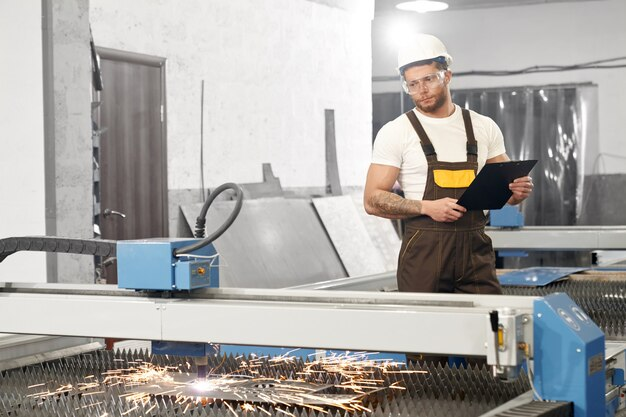
The advent and progression of CNC Plasma Cutting Technology have revolutionised the manufacturing industry, particularly in sectors that demand high precision and efficiency. For instance, the CNC plasma tools available at industrial suppliers like Macro Weld Pty Ltd represent the cutting edge of technological advancement in this field.
Understanding CNC Plasma Cutting Technology
CNC Plasma Cutting involves the use of computer numerical control (CNC) to direct a high-velocity jet of ionised gas, known as plasma, to cut through metal materials with precision. This process is not only efficient but also versatile, as it can work with a variety of metals including steel, stainless steel, aluminium, brass, and copper. The combination of speed, precision, and adaptability makes CNC plasma cutting an indispensable tool in manufacturing and fabrication.
Precision and Efficiency in Manufacturing
One of the primary benefits of CNC plasma cutting technology is its ability to produce precise cuts at high speed. The automation provided by CNC ensures consistent accuracy, reducing the likelihood of human error and material wastage. This enhances production efficiency and leads to significant cost savings in the manufacturing process.
Advantages of Using CNC Plasma in Production
The use of CNC plasma cutting offers numerous advantages, such as high precision in repetitive tasks, flexibility in cutting diverse materials, and the reduction of production times. These benefits enable manufacturers to meet stringent quality standards and customer deadlines, which is critical in industries such as aerospace, automotive, and construction.
Technological Components and Functions
CNC plasma cutting machines are equipped with several critical components including a power supply, plasma torch, and CNC control unit. The power supply provides the energy needed to create plasma from gases such as oxygen, nitrogen, and argon. The torch directs the plasma, and the control unit ensures precise motion and positioning of the cutting head.
Safety and Environmental Considerations
Despite the efficiency of CNC plasma cutting technology, it is important to consider safety and environmental concerns. Proper ventilation is required to disperse fumes and gases generated during the cutting process. Additionally, operators must wear protective equipment to safeguard against sparks and high temperatures.
Environmental Impact
The environmental impact of CNC plasma cutting can be minimised with the use of eco-friendly gases and advanced filtration systems. Manufacturers are increasingly adopting sustainable practices to reduce their carbon footprint, aligning with global environmental standards.
Applications of CNC Plasma Cutting
CNC plasma cutting is used across various industries for tasks that require precision and intricate designs. In the automotive industry, it is used to manufacture components such as frames and body panels. In construction, plasma cutting aids in creating metal structures and frameworks, contributing to the resilience and durability of buildings.
Aerospace Industry
In the aerospace industry, CNC plasma cutting is critical for producing parts with strict tolerances. The technology’s ability to accurately cut complex shapes ensures that every component meets the industry’s rigorous safety and performance standards.
Future Innovations in CNC Plasma Technology
The future of CNC plasma cutting technology looks promising, with innovations focusing on increased automation, higher precision, and reduced energy consumption. Integration with robotic arms and new software tools further enhances the capabilities of plasma cutting, paving the way for more sophisticated manufacturing processes.
As industries continue to demand higher efficiency and precision, the role of CNC plasma cutting technology is expected to expand, offering new opportunities and solutions for manufacturers worldwide.