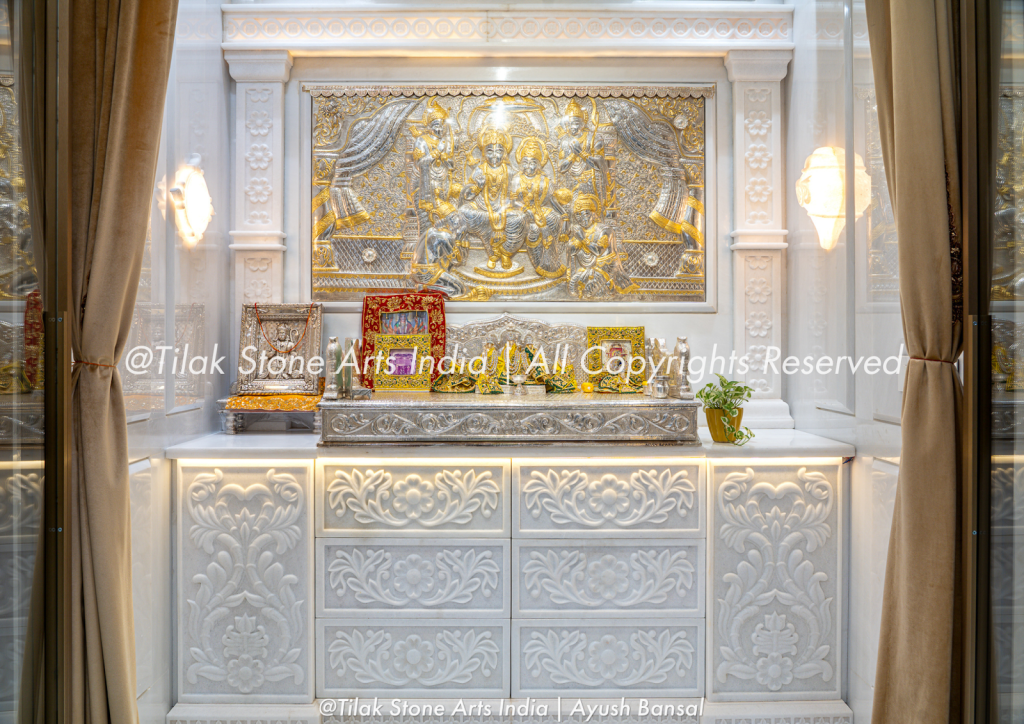
Something has shifted quietly in how affluent homeowners are approaching the decor of their living spaces. The pooja room, once tucked into a corner or treated as an afterthought during construction, is now being conceived as the emotional and architectural heart of the home. Families planning new builds or significant renovations are setting aside serious budgets for temple spaces that are as visually commanding as they are spiritually grounding.
The shift reflects something deeper than a passing design trend. A well-considered Indian pooja room design carries the values of the family it belongs to, their reverence for tradition, and their intention to create a space that holds meaning across generations. Interior designers note growing demand from clients who no longer want the sacred space treated as an accessory, but as a defining element of the interior that deserves the same deliberate care as any other room in the home.
Where Stone Meets the Sacred
The Weight of Material Choice: Not every marble carries the same quality of presence. Vietnam White Marble has become the preferred material for handcrafted home temples because of its dense composition, consistent grain structure, and the particular luminosity it holds. Unlike materials that are dull, yellow, or mottle with time, Vietnam White Marble maintains its visual clarity for decades, making it well-suited to spaces intended to endure across generations.
Surface Quality and Lasting Brilliance: The structural integrity of Vietnam White Marble allows artisans to achieve an exceptionally fine mirror polish finish, a surface treatment that reflects light in a way that perceptibly transforms the atmosphere of a pooja room. This level of finish is difficult to achieve on softer or more porous stone, and it contributes significantly to the overall impact of the temple within the broader home interior.
Craftsmanship That Cannot Be Replicated
The Language of Hand Carving: What separates a custom marble temple from a mass-produced equivalent is the degree of hand carving applied to its surface. Skilled craftsmen spend considerable time working details into pilasters, archways, and deity niches, creating a finished piece that carries genuine artistic merit. The carving process is slow and deliberate, shaped by years of training and deep familiarity with traditional temple iconography and sacred motifs.
Design Specificity as a Luxury Standard: Bespoke temple design means every dimension, carved motif, and spatial proportion is calibrated to the home it will inhabit. Craftsmen trained in shikhara architecture bring an understanding of sacred geometry and vertical proportion that informs how the temple sits within a room, commanding presence without dominating the surrounding interior. This calibration is what distinguishes a thoughtfully conceived sacred space from a generic purchase.
The Role of Specialist Training: The most accomplished marble temple craftsmen are not simply stone carvers who have shifted materials. They undergo specific training in sacred architecture, studying both classical temple forms and contemporary spatial requirements. Many are taken on guided quarry visits to understand how Vietnam White Marble is extracted, graded, and finished, giving them material knowledge that directly informs their design and carving work.
What a Statement Temple Does to a Home
Beyond Function, Into Feeling: A handcrafted marble temple does more than fulfil a religious function. It creates a visual anchor that changes how the entire room is experienced. Guests notice it on the first entry. Family members return to it daily. Over time, the space builds layers of personal and spiritual meaning that no piece of purchased furniture or curated artwork can replicate in quite the same way.
The Space That Outlasts Everything Else: Most interior design decisions are revisited within a decade. The marble temple is the exception. Families who commission a bespoke temple during a renovation often describe it as the one element they never consider changing. The quality of the material and the depth of the craftsmanship ensure the space remains beautiful and significant regardless of how the surrounding interior evolves.
Practical Reasons the Investment Makes Sense:
- Vietnam White Marble holds temperature well, keeping the deity space cool even in warm climates without surface degradation or discoloration over time.
- Bespoke sizing ensures the temple fits precisely within an alcove, niche, or dedicated room without awkward spatial gaps or structural compromises.
- Hand-carved detailing is recognised by property valuers as a distinguishing interior feature that adds measurable value to the property.
- Custom base designs accommodate specific ritual requirements, including dedicated space for lamps, incense holders, and offering trays.
- A properly installed marble temple requires minimal long-term maintenance, with surfaces that clean easily and resist common household staining.
The Design Process Behind the Investment
From Brief to Blueprint: Commissioning a custom marble temple begins with a structured design consultation. Specialist mandir designers, professionals trained specifically in sacred space aesthetics and sent on quarry visits to understand material behaviour first-hand, translate a family’s vision into precise technical drawings. This approach removes the uncertainty that has historically made marble procurement frustrating for buyers who lack direct access to skilled artisans.
Transparency as a Design Value: Families who have attempted to source quality marble independently understand the risks involved when working through intermediaries in an unorganised industry. Working with specialists who offer project tracking, logistics management, and professional installation provides certainty that the finished product will reflect the original brief. It is a more reliable path than sourcing through an unfamiliar supply chain.
When the Temple Becomes the Home’s Defining Feature
The decision to invest in a custom marble temple is rarely purely practical. It reflects a desire to create something enduring, a space that holds deep significance for everyone who lives within the home. Most families describe it as one of the most considered choices across their entire renovation. If the goal is a pooja room that carries genuine architectural weight, working with specialists who understand both material and sacred space design is the clearest path to achieving that outcome.