
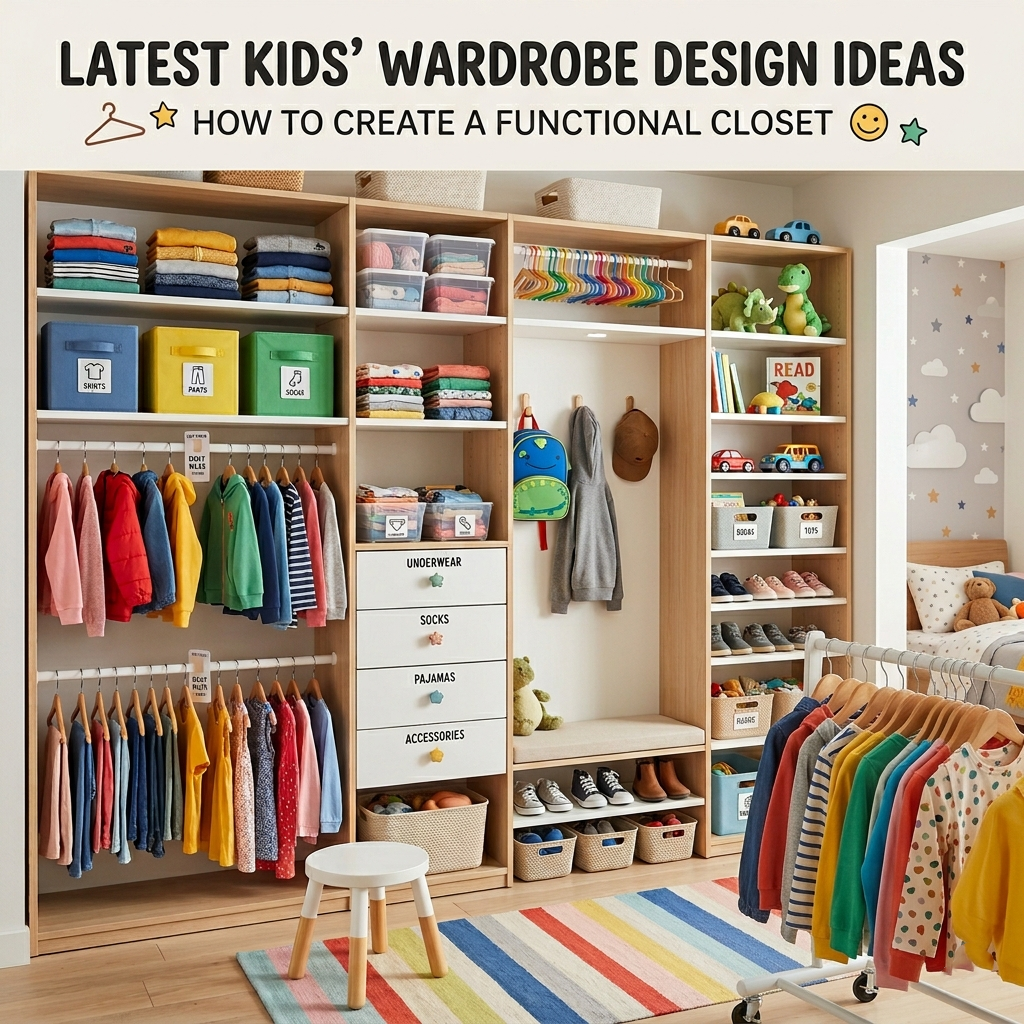
Designing a child’s room is usually harder than people expect. The room needs to look cheerful, but it also has to survive everyday mess, changing routines, growing storage needs, and constant movement. One month there are tiny clothes and soft toys everywhere, and before you realise it, school bags, books, sports items, and extra storage boxes start taking over the space.
That is why wardrobes become such an important part of kids’ rooms.
A good wardrobe is not only about storing clothes. It helps keep the room organised, creates better daily routines, and reduces clutter that builds up faster in children’s spaces than anywhere else in the house.
At the same time, kids’ wardrobes cannot be designed exactly like adult storage. Children use spaces differently. They need easier access, safer layouts, and storage that changes as they grow older. A wardrobe that works well for a five year old may stop being practical a few years later.
The best designs usually focus less on decoration and more on usability. When storage feels easy to use, the room automatically stays cleaner and more comfortable.
Kids’ Wardrobes Need To Balance Practicality And Style
Many parents focus first on colours or cartoon themes while planning children’s furniture. Those things matter, but practicality becomes more important over time.
A wardrobe should fit naturally into the child’s daily routine. If shelves are too high or drawers are difficult to open, kids stop using them properly. That usually leads to clothes ending up on chairs, beds, or floors instead.
Easy access makes a big difference.
Lower drawers for daily clothes, reachable shelves, and simple compartments help children become more independent while keeping the room organised at the same time.
The room should also feel visually calm. Too many bright colours, patterns, or oversized decorations can make the space feel crowded very quickly. Softer tones combined with warm wooden finishes usually age better and continue working even as children grow older.
Storage also needs to handle more than clothing. Toys, books, school supplies, bags, and seasonal items all slowly become part of the same room. Without proper planning, clutter builds up fast.
This is why many families now prefer a wooden wardrobe for clothes storage because it feels sturdy, practical, and easier to blend with changing room styles over the years.
Good kids’ furniture should feel useful long after current trends disappear.
Functional Wardrobes Make Daily Routines Easier
Children use wardrobes differently from adults. Their routines are faster, messier, and far less organised. Because of that, complicated storage systems rarely work well in kids’ rooms.
Simple layouts usually work better.
Drawers for frequently used clothes, baskets for smaller items, and open sections for school essentials help children manage things more easily. Once everything has a fixed place, rooms become easier to maintain daily.
Adjustable shelves are also useful because storage needs keep changing. Smaller sections that once held toys may later need to store books or folded clothes. Flexible interiors make wardrobes more practical long term.
Many parents underestimate how useful separate compartments can be. Even small divisions inside drawers help organise socks, accessories, stationery, or smaller clothing items properly.
Safety matters too.
Rounded edges, smoother handles, soft closing drawers, and stable fittings become important in children’s rooms where furniture gets used roughly every day.
The wardrobe should support the child’s routine instead of making things harder. When storage feels simple, children are far more likely to keep their belongings organised without constant reminders.
Better Organisation Makes Kids’ Rooms Feel Less Chaotic
Children’s rooms collect clutter faster than almost any other space in the house.
Toys spread everywhere, clothes pile up quickly, and random items somehow keep appearing in corners. Good wardrobe planning helps control some of that chaos before the room starts feeling overwhelming.
Different room layouts need different storage approaches.
In smaller rooms, taller wardrobes often work better because they use vertical space instead of occupying too much floor area. In larger rooms, wider layouts with mixed storage sections can help separate clothing from toys or study materials.
Organisation becomes easier when wardrobes include a mix of hanging space, drawers, shelves, and hidden sections. A single storage style rarely works well for children because they usually need space for many different things at once.
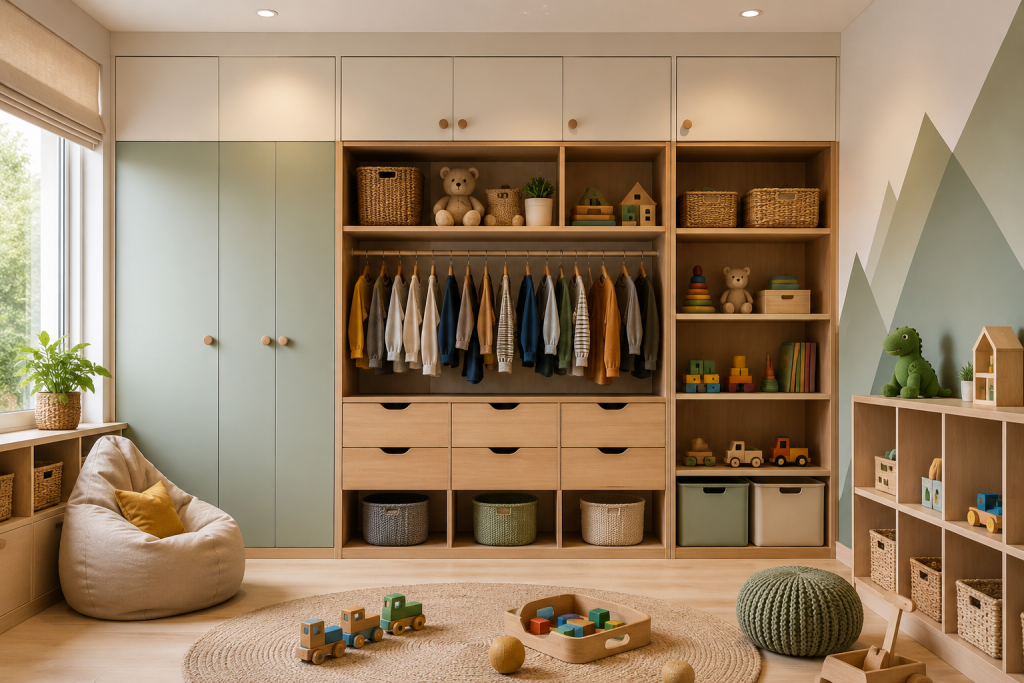
Open baskets can help younger children access toys easily, while closed cabinets keep visual clutter under control. Labelling sections also works surprisingly well, especially for school age children trying to manage their own belongings.
Some families now create activity based storage zones inside wardrobes. One section for school items, another for play materials, and separate space for clothes. This reduces confusion during busy mornings.
The easier the wardrobe feels to use, the cleaner the room usually stays.
Small And Shared Kids’ Rooms Need Smarter Storage
Not every child has a large bedroom with endless storage space. Shared rooms and compact apartments require more careful planning because every inch matters.
Bulky furniture usually creates problems in smaller spaces. Oversized wardrobes can make the room feel cramped while reducing movement around beds or study areas.
Compact layouts work better.
Sliding doors are often more practical than outward opening shutters in tight rooms because they save space around the wardrobe. Loft storage also helps keep seasonal items out of the way without overcrowding daily use sections.
Shared bedrooms need even more organisation.
Separate compartments for each child prevent confusion and help maintain some sense of personal space. Different drawer sections, labelled shelves, or divided hanging areas make daily routines easier for everyone.
Multi use furniture becomes very useful in compact homes too. Some parents now prefer wardrobes combined with study areas or additional storage units to reduce the need for extra furniture pieces.
A wardrobe with dressing table and chair can also help save space in rooms where separate furniture setups would otherwise make the area feel crowded.
The goal is not squeezing as much storage as possible into the room. The goal is creating a layout that still feels comfortable to move around in every day.
Kids’ Wardrobes Should Feel Warm And Comfortable
Children’s rooms should feel cheerful, but that does not always mean using loud colours everywhere.
Too many bright shades can sometimes make rooms feel visually busy and tiring over time. Softer colours mixed with warmer textures usually create a more balanced atmosphere.
Natural wood finishes continue working well because they pair easily with changing room décor as children grow older. Neutral wardrobes also allow parents to update bedding, wall colours, or accessories later without replacing major furniture.
Small playful details are usually enough to make the room feel child friendly. Colourful knobs, soft patterns, wall art, or smaller decorative touches create personality without overwhelming the space.
Durability matters just as much as appearance.
Children use furniture heavily every day. Scratches, rough handling, and constant movement are normal. Strong materials and reliable fittings help wardrobes last longer without looking worn too quickly.
Lighting inside wardrobes can also improve usability, especially in shared rooms or darker corners where visibility becomes difficult.
The best kids’ rooms often feel comfortable rather than perfectly designed. Spaces that support daily life naturally tend to age better over time.
Storage Needs Keep Changing As Children Grow
One thing parents learn quickly is that children’s storage needs never stay the same for long.
The wardrobe that once stored toys and tiny clothes eventually needs space for uniforms, books, hobbies, sports equipment, and countless other things. Flexible storage becomes extremely important because of this.
Adjustable shelves help wardrobes adapt over time without needing major redesigns. Removable sections, modular compartments, and movable dividers make it easier to reorganise storage as routines change.
Hidden storage sections are useful for seasonal clothing, spare bedding, or less frequently used items. This keeps the main wardrobe area less crowded and easier to manage daily.
Many families eventually realise that simpler storage systems work better long term. Complicated layouts may look attractive initially, but practical organisation matters more during everyday use.
A wardrobe should continue feeling useful years later instead of becoming outdated quickly.
At the end of the day, good kids’ wardrobe design is not really about trends. It is about creating a space that feels manageable, organised, and comfortable as children grow and their needs continue changing.