
Interior design has become an increasingly sought-after career in India, driven by urban development, evolving lifestyles, and rising expectations around functional and aesthetically designed spaces. As cities like Indore continue to expand, the need for trained designers who can handle both creative and practical aspects of design is growing steadily.
India’s interior design market generated $32.1 billion in 2023 and is projected to reach $81.2 billion by 2030, growing at a CAGR of 14.3%, supported by urbanization and increased demand for modern interiors. This growth is creating new opportunities for students who pursue structured, career-focused training.
For those starting their research, exploring options such as an interior design institute in Indore can provide a useful starting point before evaluating institutes in detail.
This guide explains what students should know about interior design institutes in Indore, including course structure, learning approach, and factors that influence career outcomes.
Understanding Interior Design Education in Indore
Interior design education in Indore has evolved to include a mix of diploma, undergraduate, and specialized programs. Institutes in the city aim to balance creative learning with practical application, helping students prepare for real-world projects.
Unlike generic programs, structured courses focus on progressive learning, where students move from basic concepts to advanced design execution. This ensures that they develop both technical and creative skills over time.
Students should look for institutes that provide a clear learning path rather than isolated modules.
Key Components of Interior Design Courses
Interior design programs are typically structured to cover multiple aspects of design, ensuring students gain a well-rounded understanding of the field.
Design Fundamentals
The foundation stage introduces students to the basic principles of design, which form the basis for all future learning.
Students learn:
- Space planning and layout design
- Color theory and composition
- Basic drawing and visualization
- Understanding proportions and scale
These concepts help students build a strong base.
Technical Skills and Tools
Technical skills are essential for translating ideas into actionable designs. Students must learn how to use industry tools effectively.
Common tools include:
- AutoCAD
- SketchUp
- 3ds Max
- Adobe Photoshop
Hands-on training in these tools helps students create professional presentations.
Practical Learning and Project Work
Practical exposure is a critical part of interior design education. Students must apply their knowledge in real scenarios to develop problem-solving skills.
Institutes emphasize:
- Studio-based assignments
- Real-world project simulations
- Site visits and fieldwork
- Model-making and prototyping
This approach helps students understand how design works in practice.
Advanced Design and Specialization
As students progress, they are introduced to more complex concepts and may choose to specialize in specific areas.
Advanced learning includes:
- Residential and commercial design
- Lighting design and material application
- Furniture and product design
- Sustainable design practices
Specialization helps students align their skills with career goals.
Importance of Practical Learning
Interior design is a hands-on profession that requires the ability to execute ideas effectively. Practical learning helps students understand how theoretical concepts apply in real-world situations.
Through hands-on training, students:
- Work on real design problems
- Learn to manage constraints
- Develop problem-solving skills
- Gain confidence in execution
Institutes that prioritize practical learning produce students who are better prepared for professional work.
Role of Design Studios in Learning
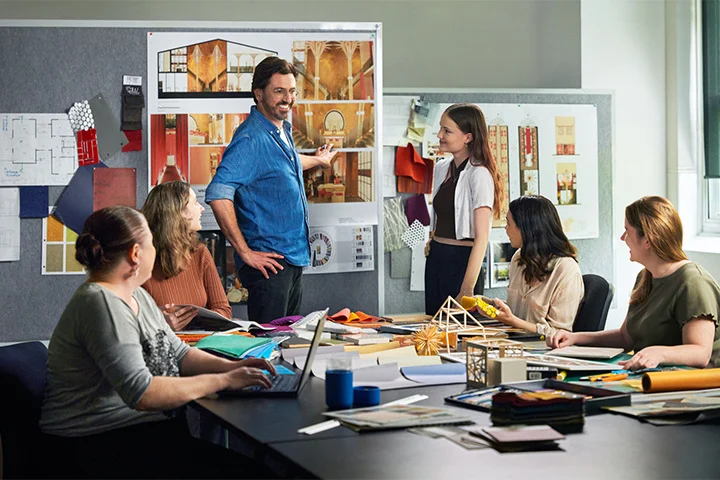
Design studios are an essential part of interior design education. They provide a structured environment where students can experiment, collaborate, and refine their ideas.
In studio settings, students:
- Work on structured projects
- Receive feedback from instructors and peers
- Develop presentation and communication skills
This experience helps them understand the complete design process.
Industry Demand for Interior Designers
The demand for interior designers continues to grow as urbanization and infrastructure development increase. Both residential and commercial sectors require professionals who can design functional and visually appealing spaces.
India’s interior design market is expected to grow from $36.89 billion in 2025 to $74.73 billion by 2034, reflecting sustained demand across sectors. This growth is creating strong career opportunities for trained designers.
Students who receive structured and practical training are better positioned to succeed in this growing market.
How to Evaluate Interior Design Institutes
Choosing the right institute requires careful evaluation of multiple factors that influence learning outcomes.
Students should consider:
- Curriculum structure: Does the course provide a clear progression from basic to advanced learning?
- Practical exposure: Are students working on real-world projects?
- Faculty expertise: Do instructors have industry experience?
- Infrastructure: Are studios, labs, and resources available?
These factors help determine the quality of education.
Infrastructure and Learning Environment
The learning environment plays a significant role in shaping student outcomes. Interior design training requires access to resources that support both creative and technical work.
Students should evaluate whether the institute provides:
- Design studios and collaborative spaces
- Material libraries for hands-on learning
- Computer labs with design software
- Workshop facilities for model-making
A well-equipped environment enhances learning.
Common Mistakes Students Should Avoid
Students often overlook important aspects when choosing institutes.
Avoid:
- Selecting institutes based only on fees
- Ignoring practical training opportunities
- Overlooking faculty experience
- Not reviewing student portfolios
These mistakes can affect long-term career growth.
Tips for Choosing the Right Institute
Students can improve their decision-making by taking a structured approach.
Focus on:
- Comparing multiple institutes
- Reviewing course content in detail
- Checking student work and outcomes
- Understanding industry alignment
Careful evaluation leads to better choices.
Building a Strong Foundation for Career Growth
Interior design requires continuous learning and skill development. Students must focus on building both creative and technical abilities.
Key areas to develop include:
- Creative thinking and visualization
- Technical knowledge and software skills
- Attention to detail
- Problem-solving abilities
A strong foundation supports long-term career success.
Balancing Creativity and Practical Execution
Interior design involves balancing creative ideas with practical constraints. Designers must ensure that their concepts are both visually appealing and functional.
Students should learn to:
- Adapt designs based on client needs
- Work within budgets and timelines
- Select appropriate materials
- Execute projects efficiently
Courses that integrate both aspects prepare students for real-world challenges.
Final Thoughts
Interior design institutes in Indore offer a range of programs that cater to different learning needs. Students should focus on institutes that provide structured learning, practical exposure, and strong industry alignment.
By choosing the right institute and actively engaging in their education, students can build the skills needed to succeed in a growing and competitive field.