Post-operative recovery is not without many challenges. Experts in knee surgery Dubai have to focus on the structural challenges and consider that as step one; the limb surgery forces the patient’s body to adapt in an unbalanced manner. From your first step post-surgery, your body begins to assume an unbalanced position. You bear weight in a protective manner on the knee, and your ligaments shift as your hips and spine tackle the shock your body experiences.
Even after a flawless mechanical fix of the knee, the kinetic chain will continue to adapt in an unbalanced manner.
The Biomechanical Comparison: Local vs. Full-Body Recovery
When considering why a knee injury impacts all other body systems, it is helpful to view the rehabilitation of a knee injury and how different rehabilitation approaches handle post-surgery recovery:
| Recovery Element | Localized Joint Approach | Kinetic Chain (Full-Body) Approach |
| Primary Focus | Knee range of motion and local swelling. | Whole spine alignment, walking mechanics, and balance. |
| Postural Management | Ignored or treated as a secondary issue. | Actively managed to prevent neck, shoulder, and back tension. |
| Crutch | Overlooked strain on upper limbs. | Addressed early to prevent rib and neck stiffness. |
| Long-Term Outcome | High risk of secondary postural aches. | Fluid movement, balanced gait, and a safer return to activity. |
The Postural Trickle-Down Effect
The effects of pelvic tilt and uneven gait don’t just stop at the lower body, and there are far-reaching effects throughout the entire body. Structural compensation then occurs up the spine. To stabilize the pelvis, the lower back must tighten. The entire thoracic spine must then provide support to the upper body, and the neck will take on the mechanical strain.
It’s very common for patients recovering from knee surgery to complain about upper body issues during the recovery process, including:
- Dull, throbbing tension at the base of the skull
- Shoulder stiffness and tension from controlling and stabilizing the upper body with crutches
- Tension headaches that develop throughout job
- Pain when turning and non-jerking their head
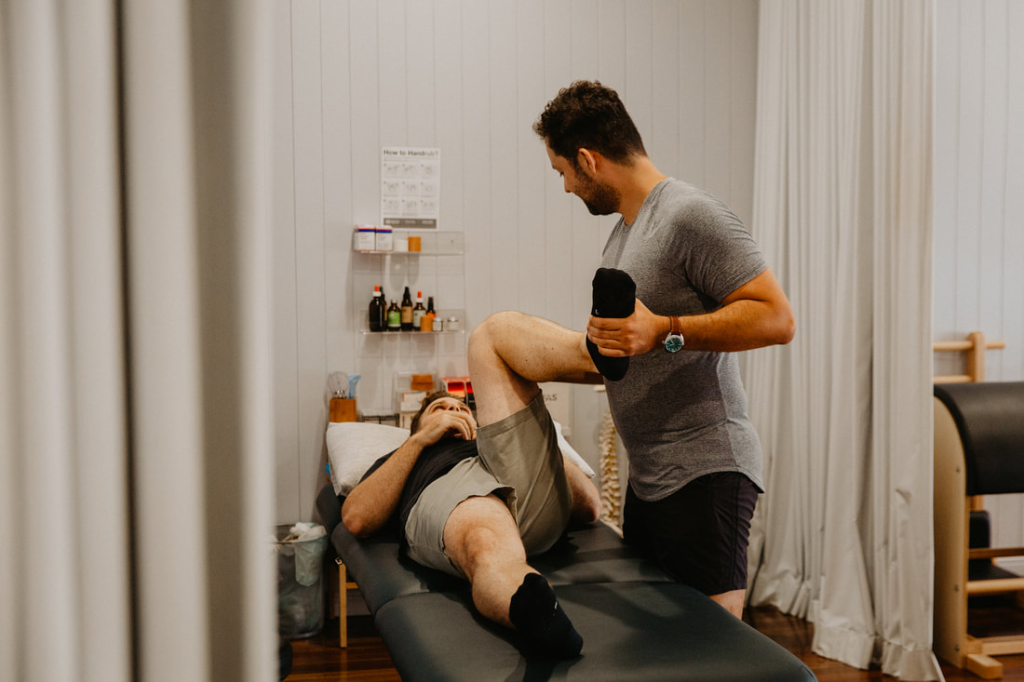
This type of pain and tension demands physiotherapy for neck pain during rehabilitation from lower limb surgery. Uneven load distribution during recovery causes tension and stiffness up the spine. Restoring mobility and improving balance, center of gravity, and gait will improve recovery.
Preventing Permanent Spinal Shifts
Limping causes the entire spine to undergo a lateral shift to the side, which will level the head. This compensation is fine short term, but if it continues will mimic or worsen changes to the structure of the spine.
Some advanced physical medicine clinics, particularly those with expertise in complex spinal dynamics, focus on lateral deviations of the spine, such as those seen in scoliosis. Clinics have developed sophisticated scoliosis treatment in Dubai options for these conditions. Using a clinical approach similar to that used in the treatment of scoliosis, therapists can often identify and correct temporary gait-related changes in posture before they become permanent.
Utilizing a chiropractic and physiotherapy clinic Dubai that integrates all of these treatment disciplines ensures that both your local chiropractic concerns and your global spinal concerns are addressed.
Whole-Body Integration for Lasting Mobility
True recovery cannot be achieved by focusing on only one part or joint of the body. This is true whether your surgery was a minor procedure to your knee or a major knee replacement.
Realignment of only your knee joint upon completion of your knee replacement surgery addresses a very small part of the problem if the rest of your body (i.e., neck, shoulders, spine) is misaligned. Integrating whole body spinal therapy into your post-operative plan enables you to maintain your posture, eliminate compensatory pain, and return to your lifestyle with balance and full strength.