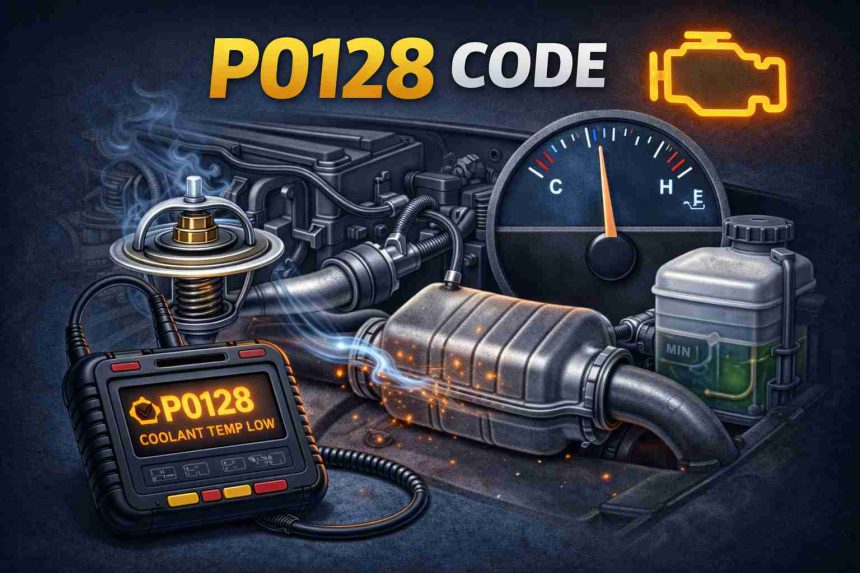
A P0128 code rarely signals an emergency, but it does mean the engine is taking longer than it should to reach normal operating temperature, and ignoring it wastes fuel and accelerates wear every single trip.
What a P0128 Code Means
A p0128 code means the engine control module (ECM) has detected that coolant temperature is not reaching the expected threshold within a set time after startup. The ECM monitors how quickly coolant warms based on engine run time, vehicle speed, and load, then compares that curve to a calibrated expectation for a properly functioning thermostat. When the engine takes noticeably longer than that model predicts, or never reaches full operating temperature, the module stores P0128. The code is almost always about the thermostat sticking open or failing to close fully, not about the coolant temperature sensor itself. Some vehicles pair this fault with a separate cooling system performance code, so it helps to pull the full code list before assuming the cause.
Why This Code Matters More Than Drivers Expect
An engine that runs cool longer than intended burns more fuel and wears out faster, even though nothing feels obviously wrong. Fuel economy calibrations, emissions strategies, and cabin heat all depend on the engine reaching design temperature promptly. A stuck-open thermostat keeps the engine in a rich, cold-start-like fuel map far longer than intended, which increases fuel consumption and raises tailpipe emissions. Over time, running cooler than spec also increases condensation buildup in the oil, which contributes to sludge formation and speeds up wear on rings and bearings. Drivers often notice weak cabin heat first, especially in cold weather, since the heater core depends on coolant reaching full temperature. Fogged windows that take longer to clear are another early sign worth asking about during intake.
Diagnosing the Thermostat
Confirming a stuck-open thermostat starts with watching live coolant temperature data on a scan tool during a cold start and short drive. A healthy engine should climb steadily to its target operating temperature within several minutes of driving, typically in the range the manufacturer specifies for that platform. If the temperature climbs slowly, plateaus early, or fluctuates instead of holding steady, the thermostat is a strong suspect. Physically checking the thermostat requires draining coolant and removing the housing, so confirming the fault electronically first saves an unnecessary teardown if a different cause is at play.
Ruling Out the Coolant Temperature Sensor
Before replacing a thermostat, verify the coolant temperature sensor itself is reporting accurately, since a drifting sensor can mimic this code without any actual thermostat problem. Compare the scan tool’s reported coolant temperature against an infrared thermometer reading taken at the thermostat housing once the engine has run for several minutes. A significant mismatch points to the sensor rather than the thermostat, and sensor replacement is a far quicker, cheaper fix. This step matters because replacing a perfectly good thermostat only to find the code returns wastes labor and parts on the wrong repair, and it erodes a customer’s confidence in the shop faster than almost any other comeback.
How P0128 Connects to Other Cooling and Performance Codes
A slow-warming engine can trigger related codes if the underlying cause runs deeper than a simple stuck thermostat. Persistent cold operation stresses other systems tied to engine management, and a fault such as p20ee, which relates to a diesel particulate filter or exhaust component depending on platform, can appear alongside cooling faults on engines where exhaust temperature management depends on the engine reaching operating temperature on schedule. Reading the full code list rather than treating P0128 in isolation helps confirm whether the cooling system is the root cause or a downstream symptom of something else.
What Drivers Should Know
A P0128 code is a maintenance item, not a roadside emergency, but it should not sit unresolved for months. The car will keep running normally in the short term, so it is tempting to put off the repair. The cost of delay shows up gradually in fuel receipts, oil condition, and eventually component wear that a simple thermostat replacement would have prevented. Technicians confirming this code benefit from complete OEM specifications for expected warm-up curves and thermostat opening temperatures, since those numbers vary by platform and generic assumptions can send a diagnosis in the wrong direction. Verifying spec against the actual vehicle, rather than a rule of thumb from a different model year, is what keeps a routine thermostat job from turning into a repeat visit.