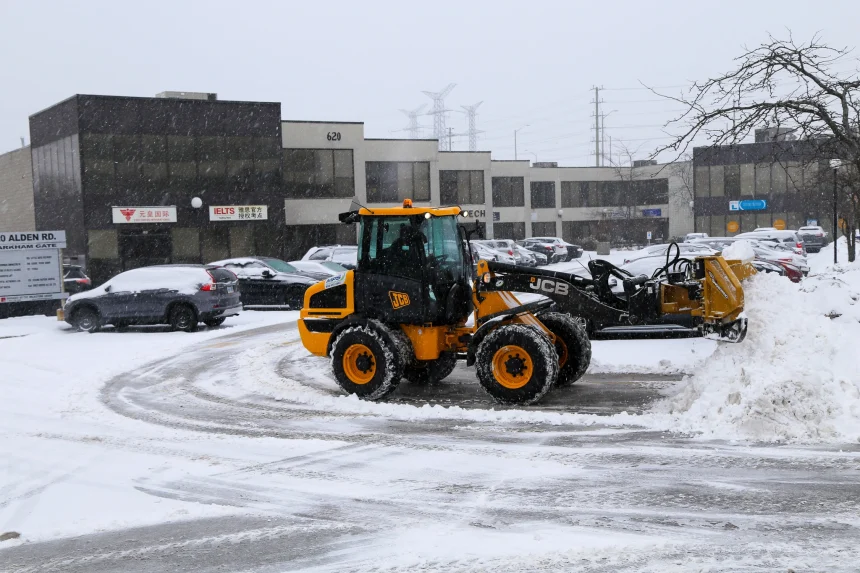
Limitless Snow Removal in Burnaby: The Lot Can Look Clear and Still Be Unsafe
A freshly plowed parking lot can give everyone a false sense of confidence.
The drive lanes are open. The stalls are visible. Snow has been pushed to the edges. From a distance, it looks handled.
But commercial parking lot snow removal liability does not always start in the middle of the lot. It often starts where people actually step: curb cuts, walkways, building entrances, stairs, ramps, loading doors, and the short path between a parked car and the front door.
That is why property managers comparing Limitless Snow Removal in Burnaby should look beyond a clean surface. Burnaby properties often have parkade ramps, busy storefronts, strata access points, shaded sidewalks, and mixed pedestrian-vehicle routes. A lot can look clear while the highest-risk walking areas are still icy.
Plowing matters. It just does not finish the job.
A safer winter plan should think about how people move through the property, not only how vehicles move across it.
Limitless Snow Removal in New Westminster: Records Matter After the Work Is Done
A cleared property is easier to defend when the work is documented.
That is a piece many managers miss. Snow was cleared, salt was applied, and the entrance looked fine in the moment. But weeks later, if there is a complaint or claim, memory is not much help.
For sites reviewing Limitless Snow Removal in New Westminster, documentation should be part of the conversation from the start. New Westminster properties can include narrow sidewalks, older building entrances, sloped walkways, mixed-use storefronts, and tight urban lots. These areas may not need dramatic snowfall to become risky.
The question is not only, “Was the lot plowed?”
It is also, “When was it plowed? Which areas were treated? Was ice control applied? Was there a follow-up after refreeze?”
Good records do not remove every risk. But they help show that the property had a plan, acted on it, and took winter conditions seriously.
Why Plowing Alone Misses the Real Walking Risk
The largest surface is not always the biggest liability.
A parking lot may take the most time to plow, but the most important winter moments often happen in smaller spaces. Someone steps out of a car. Someone crosses a curb cut. Someone walks toward an entrance while carrying bags, tools, or paperwork. That is where hesitation, slipping, and complaints usually begin.
Curb Cuts and Walking Paths
Curb cuts collect slush quickly.
If the plow clears the lane but leaves a ridge where people cross, the property may look finished while still creating an awkward walking route. The same problem happens around painted pedestrian paths, accessible stalls, and sidewalk connections.
Entrances, Ramps, and Stairs
Entrances get repeated traffic, which makes small hazards matter more.
A thin layer of ice near a doorway can be more dangerous than a visible snow pile. Ramps, stairs, shaded entrances, and parkade access points need closer attention because they can refreeze faster than open pavement.
That is where commercial parking lot snow removal liability becomes more about detail than appearance.
The Refreeze Problem Property Managers Underestimate
A plow pass can solve one problem and quietly create another.
Snow gets moved. Then it melts. Water runs across pavement. Slush collects near curbs. Temperatures drop. By evening or early morning, the “clean” area may have turned slick again.
This is why a complete snow plan needs more than one visit mindset.
Property managers should ask how the vendor handles freeze-thaw cycles. Is there a plan for return service? Are salt, sand, or ice melt included? Are high-risk routes checked after temperatures fall? Where are snow piles placed so meltwater does not drain across walkways?
The risk is not only the snow event itself.
The risk is what happens after everyone thinks the event is over.
Commercial Parking Lot Snow Removal Liability Checklist
A practical checklist should start with people, not pavement.
Before winter, property managers should walk the site and identify the routes people use first. Not the routes that look neat on a site plan. The real routes: from parking stalls to entrances, from garbage areas to buildings, from loading zones to doors, from sidewalks to ramps.
Pedestrian Route Review
Ask whether the proposal covers entrances, stairs, ramps, curb cuts, walkways, accessible parking routes, loading doors, garbage access, and mail areas.
If those areas are not listed, they may not be included.
Service Proof and Communication
Ask whether the vendor provides service logs, photos, timing updates, and post-service confirmation.
Also ask who gets contacted during active weather and who approves extra work. Clear communication helps prevent confusion when conditions change quickly.
A checklist is not just paperwork. It forces the proposal to match the actual property.
A Complete Winter Plan Is About Access, Traction, and Proof
A clean parking lot is a good start.
A safer property needs more.
It needs clear pedestrian routes, smart snow placement, ice control, refreeze planning, communication, and documentation. It also needs a vendor who understands that commercial parking lot snow removal liability is not solved by making the lot look good from the road.
This is where Limitless Snow Removal fits naturally into the discussion. The company offers fast, reliable snow clearing, modern equipment, 24/7 service, safety-focused ice control, transparent pricing, and convenient scheduled plans.
For property managers, the point is simple: do not evaluate winter service only by the size of the lot or the speed of the plow pass.
Look at the routes people use.
Look at what happens after melting.
Look at how the work is documented.
A clean lot may impress at first glance. A complete winter plan protects the property after people start walking through it.