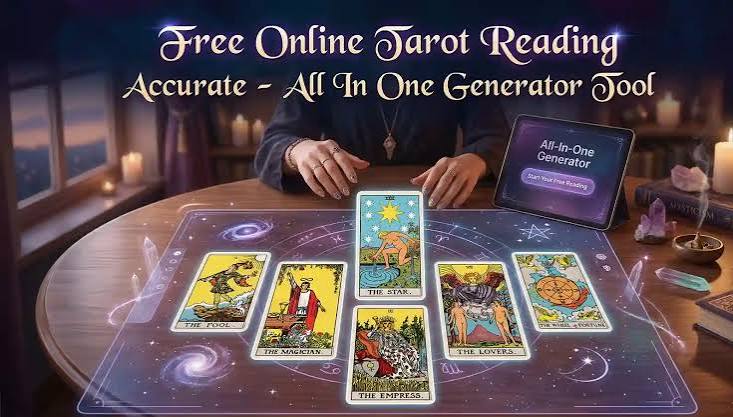
A practice once confined to kitchen tables, retreat weekends and the back shelves of gift shops is finding a new home on screens. Angel card readings, a softer cousin of tarot in which a person holds a question in mind and draws a card carrying a short, reassuring message, are increasingly taking place on websites and phones rather than with a physical deck. The shift reflects a wider appetite for quiet, low-stakes tools of reflection at a time when many people describe feeling worn down by the pace of news, notifications and daily decisions.
The change is not simply a matter of convenience. Observers of the wellbeing space note that the people arriving at online card-reading platforms are often not the same audience that would have sought out a tarot reader in person. Many are newcomers who would never describe themselves as spiritual, and who say they are looking for something closer to a journaling prompt than a prophecy. The angel card format, with its emphasis on comfort, encouragement and gentle direction, appears to suit that audience particularly well.
What an angel card reading actually is
Angel cards belong to the broader family of oracle decks. Unlike tarot, which follows a fixed structure of seventy-eight cards divided into major and minor arcana with centuries of layered symbolism, an oracle deck has no set number of cards and no obligatory system. Each deck is designed by its creator around a theme, and the messages on the cards are typically written in plain language rather than encoded in imagery that must be learned.
Angel-themed decks take this further. Their messages tend to be framed as guidance from a protective, benevolent presence: a reminder to rest, an encouragement to trust a decision already half-made, a suggestion to reach out to someone who has been on the reader’s mind. The tone is deliberately kind. Where a tarot spread might present a card that reads as a warning or a loss, an angel card is far more likely to offer reassurance and a nudge towards self-compassion.
That difference in temperament is one reason the format translates so readily to a digital setting. A person opening a website during a lunch break or late at night is not necessarily prepared for a confronting message. A card that says, in effect, that the reader already knows what to do and simply needs permission to trust it, is easier to receive on a small screen between other tasks.
Why the practice is moving online
Several forces appear to be pushing card readings from the physical to the digital. The most obvious is access. A physical angel deck has to be bought, stored and learned; an online reading can be tried in a minute, for free, without any commitment. For someone curious but hesitant, that low barrier matters. Practitioners generally suggest that people who first encounter cards online are more likely to try a reading at all, and some of them later go on to buy a printed deck once the habit has taken hold.
Privacy is another factor. Visiting a card reader or attending a group circle is a visible act. Drawing a card on a phone is not. Many users report that they are more willing to sit with a difficult question, such as whether to leave a job or how to handle a strained friendship, when the act of asking is entirely private and no one else is interpreting the result for them.
A third force is the broader normalisation of small reflective rituals. Gratitude journals, breathing apps, mood trackers and end-of-day check-ins have made it ordinary to spend a few minutes each day on structured self-reflection. Angel card readings slot naturally into that routine. The card provides a prompt; the reflection is the point.
How a digital draw works
The mechanics of an online reading are simple, and platforms in this space tend to converge on a similar flow. The user is invited to settle, take a breath and hold a question in mind. Cards are shuffled on screen. The user then chooses one or more cards by feel, in the same way a person might hover over a physical spread before picking, and the chosen card is turned to reveal its message.
One free site, which offers angel card readings as one of eight themed spreads, illustrates the model. Its deck consists of forty-four cards, each carrying a short message, and the same cards are drawn through readings built around destiny, love, relationships, life purpose, fortune, daily guidance and health, alongside the guardian angel reading itself. The site is explicit that the oracle does not predict the future. Its own framing is that a reading puts words to what the reader already feels, offers a direction, and leaves the conclusions to the person asking.
The question matters more than the card
Anyone who has spent time with oracle cards will say that the quality of a reading depends heavily on the quality of the question. A vague question tends to produce a vague reflection. Practitioners generally suggest phrasing questions in a way that invites a direction rather than a verdict: not “will this work out?” but “what do I need to keep in mind about this?” The angel card format encourages this by its nature, since the messages are rarely binary.
Some users pair the angel reading with a simpler yes-or-no draw, using the latter to check a gut feeling and the former to explore what sits underneath it. Others use a three-card approach, drawing one card each for yesterday, today and tomorrow, not as a timeline of events but as a way of noticing how a situation has shifted and where attention might go next. In every case, the recommended practice is the same: read the card, notice the first emotion that rises, and sit with it before deciding what it means.
Journals, shared readings and a return to paper
The move online has also brought features that a physical deck cannot easily provide. Chief among these is the reading journal. Platforms such as Yes No Oracle save each reading with its date and allow the user to attach a note or a feeling at the time, then return to it weeks or months later. Re-reading past entries, users say, is where the practice becomes genuinely useful: a message that seemed obscure in March can read very differently in June, and patterns in what a person keeps asking tend to say more than any single card.
Sharing is another development. Some platforms allow a reading to be sent to a friend through a private link, which has quietly become a way for people to reach out to someone who is struggling without the awkwardness of a direct conversation. A card that says something kind, sent with a short note, can open a door that a message asking “are you okay?” might not.
Perhaps the most interesting development runs in the opposite direction. At least one platform offers a printable kit, so that the digital cards can be cut out and used at a table. The idea is that the screen is a starting point rather than a destination, and that a group of friends may want to draw cards together over an evening without everyone staring at a phone. It is a rare example of an online product actively encouraging its users to step away from the screen.
Platforms that reject algorithms
A notable feature of the newer reflection-oriented platforms is what they choose not to do. Where much of the consumer internet is built on recommendation engines, personalisation and, increasingly, generative artificial intelligence, some card-reading sites have taken the opposite stance. The platform mentioned above states plainly that it uses no algorithm, no AI and no simulated randomness, and frames the draw as guided by the user’s own intention rather than by anything the software decides.
Whether or not a reader shares that belief, the design consequence is significant. An algorithmically generated message would, by definition, be tailored to what the system thinks the user wants to hear. A fixed deck of forty-four cards cannot do that. The message is what it is, and the user must do the work of relating it to their own situation. For people who are tired of being profiled, predicted and nudged, that fixed, unresponsive quality is part of the appeal.
The site’s founder, a former startup marketer named Nicolas who reportedly began drawing cards in the evenings and built the platform to share readings with distant friends, is one example of a small-scale, personal origin that stands in contrast to the venture-backed wellness apps competing for the same few minutes of a user’s day.
Where the practice draws its limits
The gentler framing of angel cards does not remove the need for caution, and the more responsible platforms are careful about it. A reading is a tool for reflection. It does not predict events, guarantee outcomes, or offer anything that should be mistaken for medical, legal, financial or mental-health advice. A health reading, for instance, might prompt a person to notice that they have been ignoring their own exhaustion; it cannot and should not inform a decision about treatment, which belongs with a qualified professional. The same applies to money. A fortune reading may help someone name a worry about their finances, but decisions about that worry should rest on professional advice, not on a card.
Practitioners and platforms alike tend to warn against a handful of common beginner habits:
- Asking the same question repeatedly until a more agreeable card appears, which turns a reflective practice into a slot machine.
- Treating a card as a verdict rather than a prompt, and acting on it without the reflection it was meant to invite.
- Skipping the pause between reading the message and deciding what it means, which is where most of the value lies.
- Using readings in place of help for problems that call for a doctor, a counsellor, a lawyer or a financial adviser.
The distinction that matters, in the end, is between guidance and prediction. A card cannot know what will happen. It can, at best, help a person notice what they already think and feel about a situation, and give them a moment to consider it before they act. Platforms that keep that distinction clear appear to be the ones building durable trust with their users.
A quieter kind of screen time
It would be easy to dismiss the online angel card reading as one more novelty in an already crowded wellbeing market. Yet the format’s persistence suggests something more. In a digital environment engineered for speed and stimulation, a practice that asks its user to slow down, breathe, choose a card by feel and sit with the first emotion that arrives is, in its own modest way, running against the grain.
Whether the cards are drawn on a screen or cut out and spread on a kitchen table, the ritual is the same one people have practised for generations: pose a question, draw a message, and take a moment to listen to the answer that was already there. The technology has changed. The appeal of a gentle prompt, offered without judgement, has not.