
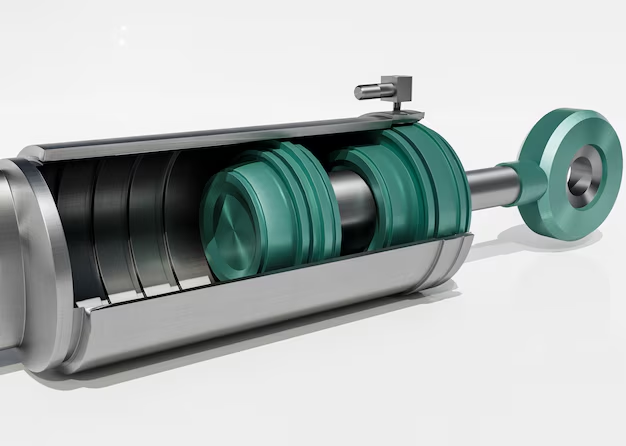
The rapid advancement of technology has left no stone unturned, and among its most significant contributions is the evolution of Linear Actuator technology. This essential component in modern automation is driving efficiency and precision in various industries. As technology progresses, the capabilities and applications of linear actuators are expanding, making them a vital part of advanced manufacturing processes.
Automation has become a cornerstone of industrial innovation, and linear actuators are at its heart. These devices convert rotational motion into linear motion, enabling precise control over a wide range of tasks. From robotics to assembly lines, linear actuators enable automating once manual processes, enhancing productivity and reducing human error.
The Role of Linear Actuators in Modern Automation
Linear actuators are integral to the automation systems that are prevalent in today’s industrial landscape. With their ability to provide controlled movement, they are used in numerous applications, including industrial manufacturing, transportation systems, and even in consumer electronics. Their versatility and reliability make them an essential tool for engineers looking to innovate and refine automated processes.
In industries like automotive manufacturing, linear actuators play a critical role in assembly lines where precision and speed are paramount. By incorporating linear actuators, manufacturers can ensure that parts are assembled with high accuracy, contributing to higher quality outputs and increased operational efficiency.
Advancements in Linear Actuator Technology
Recent advancements in linear actuator technology have focused on enhancing efficiency, precision, and durability. Innovations in materials and engineering have resulted in actuators that can operate under more demanding conditions and offer greater longevity and reduced maintenance. These advancements are crucial in supporting the demands of modern automation systems.
Electric linear actuators, for instance, have seen significant improvements in terms of performance and application versatility. Compared to their pneumatic and hydraulic counterparts, electric actuators offer better control and energy efficiency, making them a preferred choice in many sectors.
Applications Across Diverse Industries
The reach of linear actuator technology extends across diverse industries. In the medical field, for example, linear actuators are used in hospital beds and surgical tables to allow for precise adjustments, improving patient care and operational efficiency. Similarly, in the renewable energy sector, linear actuators are employed in solar panels and wind turbines to optimize the capture of energy by adjusting positions according to the sun or wind.
Additionally, linear actuators are crucial in aerospace, where precision mechanics are required for controlling wing flaps or landing gears. The robustness and precision of these actuators ensure that aerospace technologies maintain the highest standards of safety and performance.
The Future Potential of Linear Actuators
The future of linear actuators promises even greater integration with advanced technologies such as the Internet of Things (IoT) and machine learning. As industries aim to improve connectivity and data analytics, linear actuators are expected to become “smart”—equipped with sensors and connectivity options that allow them to communicate within broader automation systems.
Such developments could enable predictive maintenance, where actuators can alert systems to potential issues before they occur, further reducing downtime and enhancing operational efficiency. This level of integration will be pivotal as industries continue to adopt more sophisticated automation solutions.
Challenges and Considerations
Despite the promising advancements, there are challenges that must be addressed to maximise the potential of linear actuators in automation. Engineers and manufacturers must consider factors such as cost, compatibility with existing systems, and the requirement for customised solutions that meet specific operational needs.
Additionally, the development of standardised protocols for the integration of actuators with IoT frameworks and other automation systems remains an area for growth. Ensuring seamless communication between components will be vital in fully realising the potential of smart automation solutions.
Conclusion
The continuous evolution of linear actuator technology is shaping the future of automation across numerous industries. With enhancements in efficiency, precision, and connectivity, these devices are set to become even more integral to automated systems. As challenges are addressed and technologies advance, the role of linear actuators in driving industrial innovation is anticipated to expand significantly.
By staying abreast of the latest developments and integrating cutting-edge linear actuator technology, industries will continue to benefit from enhanced productivity and efficiency, paving the way for a more automated and technologically advanced future.