The Fibonacci sequence is a fascinating mathematical pattern that often appears in the natural world. Starting from 0 and 1, each subsequent number is the sum of the two preceding ones, forming the series: 0, 1, 1, 2, 3, 5, 8, 13, 21, 34, and so on. While it originates in pure mathematics, its connection to nature is a subject of deep curiosity. Observing this pattern in natural structures, organisms, and phenomena raises an intriguing question: Are these 10 natural occurrences examples of the Fibonacci sequence?
Sunflower Seed Patterns
Sunflowers display one of the most visually striking examples of the Fibonacci sequence. The seeds in the flower head are arranged in spirals that move outward from the center, typically in two directions. The number of spirals often matches consecutive Fibonacci numbers such as 34 and 55 or 89 and 144. This arrangement optimizes the packing of seeds, maximizing efficiency and growth space.
Pine Cones and Pineapples
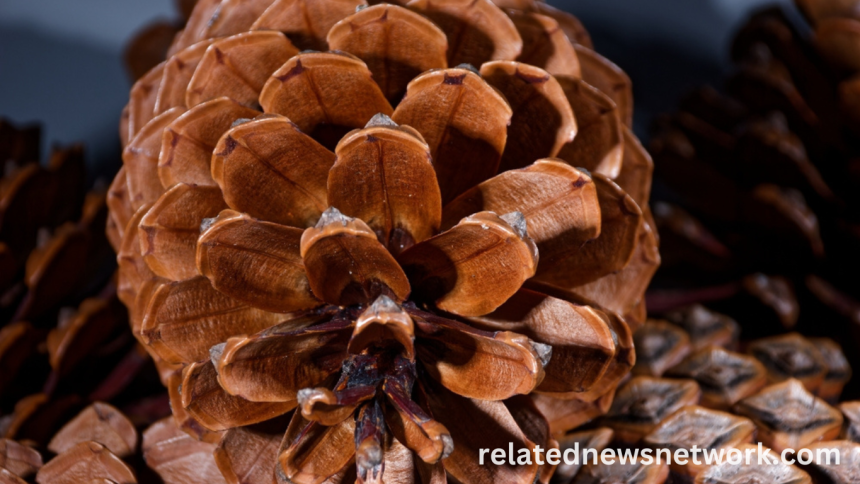
The scales of pine cones and the diamond-like patterns on pineapples both exhibit spiral arrangements that correspond to Fibonacci numbers. In pine cones, spirals are typically counted in two sets, such as 8 and 13 or 5 and 8. The same applies to pineapples, where hexagonal scales spiral in patterns aligning with the Fibonacci sequence, revealing nature’s geometric preference.
Nautilus Shells
The spiral shape of a nautilus shell is often cited as an example of the Fibonacci sequence. However, the nautilus follows a logarithmic spiral rather than one based directly on Fibonacci numbers. Though not a perfect match, the shape’s proportional growth reflects the golden ratio, which is deeply linked to Fibonacci through its limiting ratio.
Tree Branching
Tree growth follows a fractal pattern where each new branch splits from the previous one, often in ways that mirror Fibonacci numbers. For instance, the number of branches at successive levels often corresponds to the sequence, helping maximize light exposure and efficient nutrient distribution.
Flower Petals
Many flowering plants produce petals in Fibonacci numbers. Common examples include lilies with three petals, buttercups with five, chicory with 21, and daisies with 34 or 55. This pattern supports optimal arrangement for sunlight absorption and pollination success, contributing to evolutionary fitness.
Read More : This Bizarre, Long-Necked Dinosaur Had 500 Replaceable Teeth
Hurricane Spirals
Hurricanes exhibit massive spiral formations that visually resemble Fibonacci spirals. These storms form from the Coriolis effect, and while the mathematical precision of Fibonacci is not strictly present, the appearance of the spiral and its proportions evoke the natural curve associated with the sequence.
Galaxy Spirals
Spiral galaxies like the Milky Way often exhibit arms arranged in logarithmic spirals. These spirals resemble those derived from Fibonacci ratios, suggesting an underlying universal principle in structural organization. The correlation between cosmic forms and the sequence continues to captivate astronomers and physicists alike.
Fruit and Vegetable Arrangements
Romanesque broccoli, a vegetable with a complex fractal form, is one of the most cited examples of the Fibonacci sequence in food. Each floret is composed of smaller florets, spiraling in arrangements of 5, 8, or 13. The repetitive pattern contributes to structural integrity and efficient growth.
Animal Reproduction Patterns
The rabbit population problem, originally posed by Fibonacci, gives rise to the sequence itself. Beyond theory, real-life examples in certain insects and mollusks show population growth models that mirror Fibonacci growth, especially in ideal, unconstrained environments.
Human Body Proportions
Human anatomy frequently demonstrates Fibonacci-related proportions. The number of bones in each section of a finger (2 in the thumb, 3 in the rest), the division of the hand, the ratio of forearm to hand length—all exhibit proportions linked to the Fibonacci sequence and the golden ratio, underscoring mathematical harmony in biological design.
Frequently Asked Questions
What is the Fibonacci sequence?
It is a series of numbers where each number is the sum of the two preceding ones, starting from 0 and 1.
Why is the Fibonacci sequence important in nature?
It often reflects optimal growth patterns, structural efficiency, and natural symmetry in plants, animals, and other phenomena.
Is the nautilus shell a perfect Fibonacci spiral?
Not exactly. It follows a logarithmic spiral, which resembles Fibonacci proportions but isn’t mathematically precise.
How do sunflowers use the Fibonacci sequence?
Their seed patterns follow Fibonacci spirals to maximize space and seed distribution within the flower head.
Do all flowers follow the Fibonacci sequence?
Many do, but not all. The pattern is common, especially in flowers with 3, 5, 8, or 13 petals.
Can Fibonacci numbers be found in human anatomy?
Yes, in proportions of limbs, digits, and even facial symmetry—often aligning with the golden ratio.
Are spiral galaxies examples of the Fibonacci sequence?
They resemble Fibonacci spirals in form, showing structural harmony similar to natural and mathematical spirals.
How do Fibonacci numbers benefit plants?
They help in optimal leaf arrangement, light exposure, and reproductive efficiency, enhancing survival and growth.
Conclusion
The Fibonacci sequence reveals itself across an incredible spectrum of natural occurrences, from the micro-patterns of flowers to the vast structures of galaxies. While not every example is a textbook match, the consistent appearance of Fibonacci-like forms in nature suggests a deeper order underlying natural design. These patterns serve both aesthetic and functional purposes, offering insight into the way life organizes, evolves, and thrives within the framework of mathematical principles.