In the fascinating world of dinosaurs, few stand out quite like Nigersaurus. With a name that translates to “Niger reptile,” this dinosaur captured the attention of paleontologists not just for its unusual appearance but also for its extraordinary dental structure. What makes Nigersaurus a true oddity among its prehistoric peers is its unique combination of a long neck and a jaw equipped with over 500 replaceable teeth, setting it apart from more well-known long-necked dinosaurs such as Brachiosaurus or Diplodocus.
Discovery in the Sands of Niger
The first fragments of Nigersaurus fossils were discovered in the Elrhaz Formation in the Republic of Niger, located in West Africa. These sediments date back to the middle of the Cretaceous period, approximately 115 million years ago. Although early finds were limited and fragmented, it wasn’t until the late 1990s and early 2000s that more complete remains came to light, thanks to the work of American paleontologist Dr. Paul Sereno and his team. Their discoveries finally gave the world a clearer picture of what this odd herbivore looked like.
Anatomy Beyond Imagination
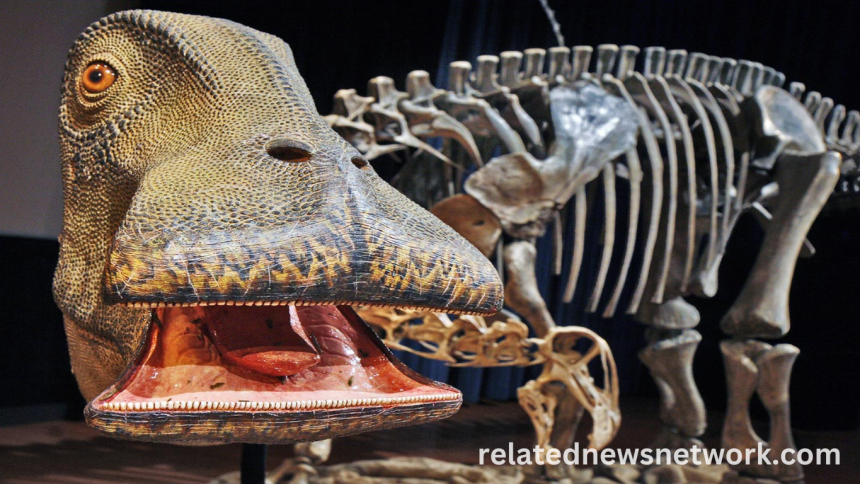
Unlike most other sauropods, which had narrow muzzles and upward-facing nostrils, Nigersaurus possessed a broad, flattened snout more reminiscent of a vacuum cleaner attachment than a traditional dinosaur face. Its jaw was shaped in a wide, straight-line fashion, almost like a horizontal shovel—an adaptation that gave it a unique feeding method not seen in other dinosaurs of its class.
Its neck, though long by modern standards, was relatively short for a sauropod. It had only thirteen cervical vertebrae—fewer than its relatives. This structural difference suggested that it wasn’t designed for browsing treetops. Instead, its anatomy pointed toward a lifestyle of grazing low vegetation, such as ferns and horsetails, likely no more than a meter off the ground.
The Marvel of 500 Replaceable Teeth
The defining feature of Nigersaurus—and the one that has baffled and intrigued scientists the most—is its extensive dental arrangement. The dinosaur’s jaws held more than 500 slender, column-like teeth, which were continually replaced throughout its life. This characteristic is known as polyphyodonty, common in reptiles, but rarely to this degree of specialization.
Each tooth had a life span of only a few weeks, meaning Nigersaurus was constantly shedding and regrowing teeth. These teeth were arranged in tight rows, forming what scientists refer to as “dental batteries,” similar to those found in hadrosaurs or ceratopsians. However, in Nigersaurus, these batteries were located at the very front of the jaws, rather than the rear—a trait unseen in any other known dinosaur.
A Grazing Machine of the Cretaceous
With its specialized mouth structure and broad snout, Nigersaurus was perfectly adapted to graze on soft, ground-level vegetation. Its feeding strategy likely involved sweeping its wide jaw over the forest floor, clipping low-lying plants in large swaths. Its lightweight skull was reinforced by an intricate system of struts, allowing it to stay strong despite the constant wear and tear from intensive feeding.
This adaptation made it one of the earliest known dinosaurs to evolve such a grazing-specific approach. The rapid tooth replacement system ensured it was always ready to chomp through plant matter without pause, much like a prehistoric lawnmower perpetually fueled by evolution.
Read More : 10 Famous Scientists and Their Contributions
Insights from CT Scans and Reconstructed Skeletons
Modern paleontological techniques such as high-resolution CT scanning have allowed scientists to delve deeper into the internal structures of Nigersaurus. These scans revealed more about the jaw mechanics, tooth development, and even the brain cavity, helping researchers understand not only how it fed but also how it processed sensory information.
In 2007, a complete reconstructed skeleton of Nigersaurus was unveiled by Dr. Sereno and his team, giving the world a full view of this marvelously strange creature. The skeletal mount highlighted its lightweight bones, large eye sockets, and the unique placement of its snout and teeth.
A Dinosaur That Redefined Expectations
Nigersaurus continues to be a symbol of how much diversity existed within the dinosaur world. It challenges previous assumptions that all sauropods were built alike, showing that evolution shaped these creatures in wildly different ways depending on their ecological niche. With a body engineered for efficiency, a neck designed for low browsing, and a mouth that never stopped replacing teeth, Nigersaurus stood apart as one of the most distinct herbivores to walk the Earth.
A Legacy Etched in Stone
Despite its bizarre features, or perhaps because of them, Nigersaurus has carved out a niche in the imagination of scientists and dinosaur enthusiasts alike. Its story is a reminder that prehistoric life was far more diverse and surprising than once believed. Every bone, every tooth, and every fossil uncovered offers a new glimpse into the wonders of ancient evolution.
As paleontologists continue to study its fossils, Nigersaurus remains a testament to the bizarre brilliance of natural design, proving that in the age of dinosaurs, even the strangest adaptations could lead to thriving success.
Frequently Asked Questions
What is Nigersaurus?
Nigersaurus is a plant-eating dinosaur known for its long neck and over 500 replaceable teeth.
When did Nigersaurus live?
Nigersaurus lived approximately 115 million years ago during the middle of the Cretaceous period.
Where was Nigersaurus discovered?
It was discovered in the Elrhaz Formation in the Republic of Niger, West Africa.
How many teeth did Nigersaurus have?
Nigersaurus had over 500 teeth that were continuously replaced throughout its life.
What did Nigersaurus eat?
It primarily grazed on soft, low-growing plants like ferns and horsetails.
How long was Nigersaurus?
Nigersaurus measured about 30 feet (9 meters) in length from head to tail.
Was Nigersaurus related to other sauropods?
Yes, it was a member of the sauropod family but had unique adaptations unlike its relatives.
How did scientists study Nigersaurus in detail?
CT scans and fossil reconstructions helped scientists understand its anatomy and feeding mechanisms.
Conclusion
Nigersaurus was a truly unique dinosaur, showcasing nature’s ability to create astonishing adaptations. Its long neck, wide muzzle, and over 500 replaceable teeth made it a specialized ground grazer like no other. Through modern technology and dedicated research, scientists have unraveled its mysteries, offering a deeper understanding of dinosaur diversity. Nigersaurus stands as a fascinating example of evolutionary ingenuity and continues to captivate curious minds worldwide.