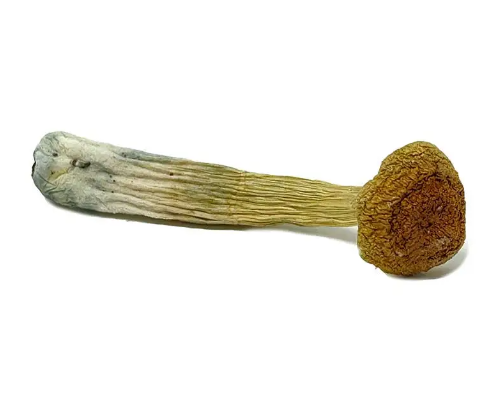
Mushroom products have expanded far beyond traditional dried ingredients. Today, online catalogues can include chocolates, gummies, candies, capsules, powders, and other formulated products. This wider selection can make mushroom-related products more accessible to explore, but it can also create confusion for people who are unfamiliar with the terminology.
One particularly important distinction is between ordinary food products containing edible mushrooms and products associated with psychoactive mushroom compounds. They may look similar on a product page, but their ingredients, classification, and regulatory context can be very different.
Understanding how mushroom edibles are categorised and described can therefore help consumers read product information more carefully. Rather than focusing only on appearance or marketing language, it is useful to consider the actual ingredients, format, labelling, packaging, and applicable regulations.
What Counts as a Mushroom Edible?
The term “mushroom edible” can refer to several different types of products, so identifying the exact category is an important first step.
Some products may contain ordinary culinary mushrooms as an ingredient. Others may use mushroom powders or extracts within a formulated food product. There are also products marketed around mushroom-derived compounds that fall into very different legal and regulatory categories.
Common edible formats can include:
- Chocolates
- Gummies
- Candies
- Other formulated confectionery products
The format alone does not explain what is inside the product. Two chocolates, for example, can have completely different ingredients and regulatory classifications.
This is why consumers should look beyond the visual presentation. Packaging may make a product resemble a conventional sweet, but the ingredient list and product description provide much more useful information about what it actually is.
Understanding the category before making comparisons is particularly important when a catalogue contains both conventional mushroom foods and specialised mushroom products.
Whole Mushrooms vs Mushroom-Derived Ingredients
Not every mushroom product contains whole mushrooms in their original form. Some products use mushroom powders, extracts, or other processed ingredients as part of a finished formulation.
Whole mushroom material refers to the fungal material itself, while powders may involve dried and processed mushroom material. Extracts involve an additional processing step and should not automatically be assumed to be equivalent to whole mushrooms.
The distinction becomes particularly important in formulated products because additional ingredients may also be present. A chocolate or gummy, for example, can contain several ingredients beyond the mushroom-derived component.
Consumers should therefore look for information that clearly identifies:
- The type of mushroom or mushroom-derived ingredient.
- Whether the product uses whole material, powder, extract, or another form.
- Other ingredients included in the formulation.
- The product’s overall format.
Clear terminology makes it easier to compare products without assuming that similarly named items have identical compositions.
It also helps separate factual product information from broad marketing descriptions that may not explain what the product actually contains.
Why Edible Products Require Careful Labelling
Edible products can require particularly careful labelling because they may combine several different ingredients into one finished item. When a product is presented as a chocolate, gummy, or candy, consumers may naturally focus on its appearance rather than examining its composition.
For retailers such as Shrooms Direct Canada, clear product information can help consumers understand what they are actually looking at before making comparisons.
Several details can be particularly useful:
- Product identification: The product should clearly state what type of item it is.
- Ingredients: The listed ingredients should be easy to locate and understand.
- Serving information: Where applicable, relevant product information should be presented clearly without relying on vague terminology.
- Quantity: The amount of product contained in the package should be identifiable.
- Product category: Consumers should be able to distinguish between ordinary mushroom foods and products involving different mushroom-derived compounds.
Good labelling is especially important when products are visually similar to conventional confectionery. Clear information allows consumers to distinguish products based on their actual composition rather than their appearance.
Responsible descriptions should also avoid unsupported claims. A product listing can explain what an edible contains without making promises about personal outcomes.
Packaging and Storage Considerations
Packaging is an important part of any edible product because it protects the contents while also communicating essential information to the consumer.
Several aspects can influence how packaging functions:
- Product integrity: Packaging should help protect the contents from environmental conditions that could affect the product.
- Labelling: Important product information should remain clear and accessible.
- Environmental exposure: Heat, moisture, light, and air can affect different food products in different ways.
- Identification: Packaging should make it possible to distinguish one product from another.
- Product information: Relevant ingredients and specifications should remain easy to reference.
Food-style products can be particularly sensitive to their surroundings. Chocolate, for example, can respond to temperature changes, while other formulations may have different storage considerations.
Packaging therefore has two roles. It protects the product, and it acts as an information source.
Clear packaging can also reduce confusion when a consumer has purchased several products with similar appearances. Distinct product identification helps ensure that the contents can be understood without relying entirely on memory or external information.
How Marketing Can Create Confusion
Marketing can influence how consumers interpret mushroom edibles. Bright colours, confectionery-style packaging, unusual product names, and psychedelic imagery can make specialised products appear similar to ordinary sweets.
Visual presentation is not necessarily an accurate guide to composition.
Certain terms can also be interpreted differently depending on context. A product may use language associated with mushrooms, wellness, natural products, or psychedelic culture without clearly explaining what those terms mean in relation to the actual ingredients.
Consumers can reduce confusion by asking straightforward questions:
- What exactly is contained in the product?
- Is the mushroom material identified clearly?
- Are other ingredients listed?
- Is the product being described factually or through promotional language?
- Does the product belong to a category with specific legal restrictions?
A clear distinction between factual information and marketing language makes product research more reliable.
Retailers also benefit from this approach. When product descriptions provide useful information instead of relying primarily on attractive wording, consumers have a clearer basis for comparing products.
Legal and Regulatory Awareness
Mushroom edibles can fall under very different legal frameworks depending on their ingredients. This is one of the most important areas for consumers to understand when exploring specialised products.
Not all mushroom products are governed by the same rules. Ordinary food products containing edible mushrooms are fundamentally different from products involving controlled mushroom-derived compounds.
Several principles are worth keeping in mind:
- Different substances have different classifications: The legal status of a product depends on its actual ingredients and applicable legislation.
- Rules can vary by jurisdiction: Regulations in Canada may differ from those in other countries.
- Psilocybin has a distinct legal status: Products involving psilocybin should not be assumed to follow the same rules as ordinary mushroom foods.
- Online listings are not legal guidance: The appearance of a product on a website does not automatically establish that every activity involving that product is lawful.
- Current official information matters: Regulatory rules can change, so legal questions should be checked against appropriate government sources.
This awareness is particularly important when an online catalogue contains several mushroom-related categories. Similar packaging or terminology does not mean that the products share the same legal framework.
Conclusion
Mushroom edibles can take many forms, from conventional foods containing mushrooms to specialised formulated products. Their appearance alone does not provide enough information to understand what they contain or how they are classified.
A more informed approach begins with the basics: identify the product type, examine the ingredients, understand whether whole mushrooms or derived ingredients are used, consider the packaging and labelling, and distinguish factual information from marketing language.
Legal awareness is equally important. Different mushroom products can fall under very different regulatory frameworks, and online availability should never be treated as proof of legality.
By paying attention to composition, presentation, terminology, and regulatory context, consumers can approach mushroom edibles with a more careful and informed understanding of the category.