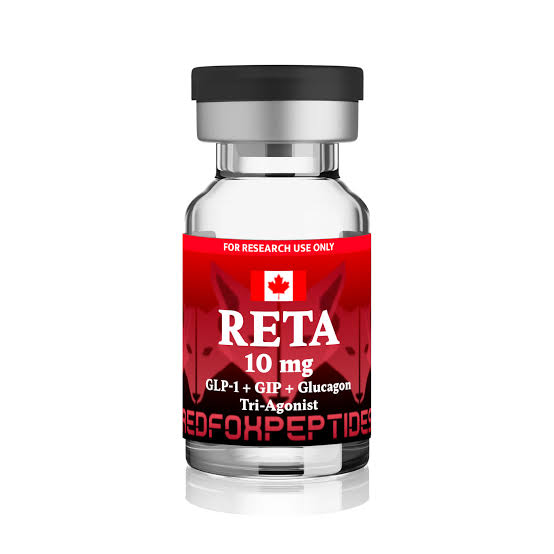
Anyone who has spent an evening comparing research-peptide listings in Canada knows how confusing the pricing can be. One vial of Retatrutide might be listed at a figure that looks like a bargain, while an apparently identical vial from another vendor costs nearly twice as much. Some suppliers quote in Canadian dollars, others in US dollars with the conversion buried in the checkout. Shipping, brokerage, testing and vial size all move the real cost in ways that a headline price never shows.
The temptation is to sort by price and click the cheapest option. For research reagents, that is rarely the right call. A vial that is under-filled, under-purified or badly stored is not cheaper; it is a wasted experiment plus the cost of a replacement. At the same time, the most expensive listing is not automatically the best, and Canadian researchers who work to a budget deserve a method for telling real value from marketing.
This guide lays out nine practical ways to compare peptide prices across Canadian and international suppliers so that the comparison is fair, the hidden costs are visible, and quality is never the thing that gets traded away. It uses Retatrutide as the running example because it is currently one of the most price-volatile compounds on the market, but every method applies equally to BPC-157, Tirzepatide, CJC-1295, GHK-Cu or any other research peptide.
1. Compare Price per Milligram, Not Price per Vial
The single biggest source of confusion in peptide pricing is vial size. A 5 mg vial, a 10 mg vial and a 30 mg vial of the same compound will be priced very differently, and the cheapest vial is almost never the cheapest milligram. Before comparing anything else, convert every listing into a cost per milligram: divide the listed price by the stated quantity of peptide in the vial.
Retatrutide is a clear example. Larger vials are increasingly standard because the compound is typically studied over extended periods and researchers prefer fewer, larger units to reduce per-shipment costs and handling. A supplier such as NOX Peptides Canada stocks Retatrutide canada researchers can order in a 30 mg format, and that single figure only becomes comparable to a competitor’s 10 mg vial once both are expressed per milligram.
Two cautions apply. First, per-milligram price assumes the stated quantity is accurate, which is why the later points on testing matter. Second, a very large vial is only good value if the research plan will actually use it before the material degrades in storage, so match the vial size to the intended work rather than buying the biggest unit reflexively.
2. Confirm the Currency and the Exchange Rate Used
A surprising number of listings that appear on Canadian searches are priced in US dollars. Some display a maple leaf and a “.ca” domain yet still bill through a US processor. With the exchange rate typically adding a significant premium, plus a foreign transaction fee from many Canadian credit cards, a US-dollar price needs to be inflated meaningfully before it can be compared with a Canadian-dollar price.
Check three things on any listing: the currency symbol used on the product page, the currency shown at checkout, and whether the site states which exchange rate it applies if it converts for you. Domestic suppliers such as NOX Peptides Canada bill in Canadian dollars, which removes the conversion uncertainty entirely and makes the number on the page the number that appears on the statement.
3. Add Shipping, Duties and Brokerage Before Comparing
Landed cost is the only cost that matters. A vial that is priced lower from an overseas marketplace can end up more expensive than a domestic one once international courier charges, import duties, GST or HST collected at the border, and courier brokerage fees are added. Brokerage fees in particular catch people out, because they are charged by the courier on delivery and never appear at checkout.
Build a simple comparison table with a column for each of these items. For a domestic order the extra columns are usually just shipping and sales tax, both visible at checkout. For an international order they can include:
- International courier or postal charge
- Any customs duty applied to the tariff classification
- GST/HST assessed on the declared value at the border
- Courier brokerage or disbursement fee
- Foreign transaction fee on the payment card
Only once every column is filled does a fair price comparison exist. Many Canadian researchers find that the domestic option wins on landed cost even when its headline price is higher.
4. Price the Certificate of Analysis, Not Just the Peptide
Third-party testing costs money, and that cost is built into the price of a vial from any supplier who actually performs it. When comparing two listings, ask whether each one includes a batch-specific certificate of analysis (COA) from an independent laboratory showing purity by HPLC and identity confirmation by mass spectrometry. A supplier who cannot produce one is either not testing or is not disclosing the results, and either way the lower price reflects a missing service.
Treat the COA as part of the product. A listing that includes independent testing at a moderate premium over an untested listing is often the cheaper option in practice, because the untested vial carries a real probability of being under-dosed or contaminated. NOX Peptides Canada publishes third-party COAs for its batches, which means the purity figure on the certificate can be checked against the price rather than taken on faith.
When reviewing a COA, look for the batch or lot number, the test date, the name of the testing laboratory, the method used, and a purity figure. A generic certificate with no lot number that could apply to any vial ever shipped is not the same thing as batch-level testing.
5. Adjust the Price for Stated Purity
Purity is a multiplier on value. A vial labelled 10 mg at 99 percent purity contains more usable peptide than a vial labelled 10 mg at 90 percent purity, and the difference compounds over a research programme. A practical way to compare is to calculate the effective cost per milligram of pure peptide: divide the price by the stated milligrams multiplied by the stated purity fraction.
For instance, if two vials are both priced identically but one is documented at 99 percent and the other at 93 percent, the higher-purity vial delivers roughly six percent more active material for the same money. That gap is often larger than the price difference between suppliers, which is why purity-adjusted pricing frequently reverses the order of a simple price sort.
This calculation is only meaningful when the purity figure comes from an independent lab. A purity claim printed on the label with no supporting certificate should be treated as unverified rather than plugged into the formula.
6. Factor in Fill Accuracy and Net Peptide Content
Purity tells you what fraction of the powder is the target peptide. It does not tell you how much powder is in the vial. Lyophilised peptides contain residual water and counter-ions such as trifluoroacetate or acetate, and a vial labelled 30 mg may contain 30 mg of total powder rather than 30 mg of net peptide. Some suppliers state net peptide content explicitly; others do not.
When a COA includes a quantitative assay or net peptide figure, use that number in the per-milligram calculation rather than the label figure. Where no such figure is available, treat the label quantity as an upper bound. Reputable Canadian suppliers increasingly disclose this because researchers ask for it, and the willingness to answer the question is itself a useful signal about which supplier is worth paying more for.
For reconstitution arithmetic, the net peptide figure is also what determines the concentration once bacteriostatic water is added. A 30 mg vial reconstituted with 3 mL of diluent gives a nominal 10 mg per mL, but only if the 30 mg is real. This is lab arithmetic, not a dosing instruction; peptides such as Retatrutide are sold for research use only and are not approved by Health Canada or the FDA for human use.
7. Compare Bundle and Volume Pricing Carefully
Most suppliers offer discounts for buying multiple vials, and these can be substantial. The trap is that volume discounts make it easy to overbuy. A 20 percent saving on ten vials is not a saving if six of them sit in a freezer beyond the period over which the supplier’s stability data applies, or if the research question changes and the extra material is never used.
When comparing bundles, work out the per-milligram price at each tier and then ask what quantity the research plan realistically needs over the next several months. Compare suppliers at that quantity, not at the tier that gives the deepest discount. A supplier with modest bundle pricing but a good single-vial price may be the better choice for a small programme, while a larger lab running multiple experiments may find the deeper tier worthwhile.
It is also worth checking whether bundle pricing applies across products. Some suppliers allow mixed bundles of, say, Retatrutide with BPC-157 or Tirzepatide, which is more useful for a diversified research programme than a single-compound discount.
8. Weigh Shipping Speed and Cold-Chain Handling as Part of the Price
Peptides are sensitive to heat and repeated temperature cycling. A vial that spends two weeks in international transit through summer sorting facilities may arrive with lower purity than the COA states, because the COA was generated before shipping. Domestic shipping within Canada is usually measured in days rather than weeks, and the vial passes through fewer handling points.
When comparing prices, consider what the supplier does to protect the product in transit. Insulated packaging, ice packs for warm months, and shipping early in the week to avoid weekend holds in a depot all cost the supplier something and are reflected in the price. A cheaper listing that ships in a padded envelope with no thermal protection is offering a different product, not the same product for less.
Domestic suppliers also tend to have clearer policies on lost or damaged parcels, because they are working with a single carrier network rather than a chain of handoffs. The value of a replacement policy is hard to price until something goes wrong, at which point it is the only thing that matters.
9. Put a Value on Support, Documentation and Accountability
The final adjustment is the hardest to quantify but often the most important. A supplier who answers technical questions, provides storage guidance, publishes batch records, and operates from a Canadian address with a Canadian business registration is accountable in a way that an anonymous overseas storefront is not. If a batch turns out to be problematic, a domestic supplier can be contacted, can issue a recall, and is subject to Canadian consumer protection rules.
Ask these questions of any supplier before comparing the final numbers:
- Is there a physical business address in Canada and a way to reach a person?
- Are COAs published per batch and downloadable before purchase?
- Is there a stated policy for damaged, lost or non-conforming shipments?
- Does the product page clearly state that the peptide is for research use only?
- Are storage and handling recommendations provided?
A supplier that answers yes to all of these is providing services that an untested, anonymous listing does not. Those services have a cost, and paying it is usually the cheapest way to avoid a failed experiment.
Frequently Asked Questions
Why do Retatrutide prices vary so much between suppliers?
Retatrutide is an investigational triple agonist of the GLP-1, GIP and glucagon receptors developed by Eli Lilly, and interest in it grew sharply after phase 2 trial data reported substantial mean weight reduction. Demand outpaced supply in the research market, and synthesis is more complex than for shorter peptides. Price differences reflect vial size, purity, testing, currency, shipping and supplier overhead, as well as the fact that some listings are simply priced opportunistically. The phase 3 TRIUMPH programme is ongoing and the compound is not approved for human use in Canada or elsewhere.
Is a cheaper peptide always lower quality?
Not always. Some suppliers operate on thinner margins, buy in larger volumes or have lower overhead. The point of the methods above is to identify when a low price reflects efficiency and when it reflects a missing service such as testing, cold-chain handling or accountability. Price alone cannot answer that question; documentation can.
Should Canadian researchers avoid international suppliers entirely?
Not necessarily, but the landed cost, transit time and accountability gap should be calculated rather than assumed. For many compounds, particularly high-demand ones such as Retatrutide, a domestic supplier with published testing frequently comes out ahead once every cost is included.
What is the minimum documentation to accept before comparing prices?
A batch-specific certificate of analysis from a named independent laboratory showing HPLC purity and mass spectrometry identity confirmation. Without that, the stated quantity and purity are unverified and the per-milligram calculation is meaningless.
Final Thoughts
Comparing peptide prices well is mostly a matter of refusing to compare the wrong numbers. Price per vial, price in a foreign currency, price before shipping and price without testing are all incomplete figures. Once every listing is converted to a landed, purity-adjusted, per-milligram cost with documentation attached, the comparison becomes fair, and the answer is often different from what a simple price sort would suggest.
For Canadian researchers, the shortest path to that fair comparison is usually a domestic supplier that publishes third-party testing, bills in Canadian dollars and ships within the country. NOX Peptides Canada meets those criteria for Retatrutide 30 mg and its wider catalogue, which makes it a sensible benchmark against which other listings can be measured. Whatever supplier is chosen, remember that research peptides are laboratory reagents, not medicines, and nothing in a price comparison changes that.