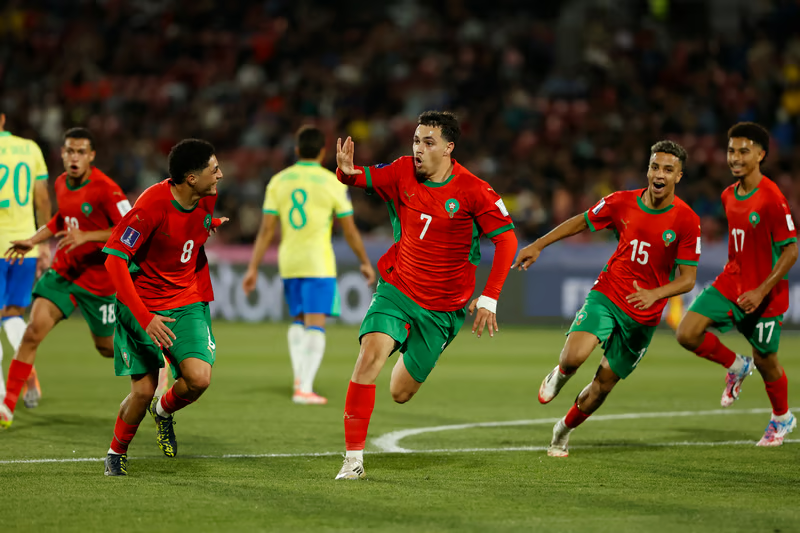
The anticipation surrounding the upcoming FIFA tournament is unlike anything the sporting world has seen before. With the expanded format and the unique geographical footprint spanning three host nations—Canada, Mexico, and the United States—the world cup 2026 is set to be a historic milestone in athletic competition. As 48 nations prepare to converge across North America, fans are already speculating about the high-stakes encounters, tactical battles, and potential underdog stories that will define the tournament.
Whether you are a seasoned football analyst or a casual fan, the sheer scale of this event promises an unparalleled spectacle. From iconic stadiums to the emergence of global footballing powerhouses, the world cup 2026 represents a new era for the beautiful game. In this article, we explore the most anticipated matchups and the dynamics that make this tournament a must-watch event.
The Evolution of the Tournament Format
Before diving into specific matchups, it is essential to understand the structural shift. Moving from 32 to 48 teams changes the group stage dynamics significantly. With more slots available, we are likely to see nations that have historically struggled to qualify find their way into the tournament. This expansion increases the probability of “David vs. Goliath” clashes in the opening rounds, which often provide the most memorable moments of any Fun88 trang chủ campaign.
The tournament will feature 104 matches, testing the squad depth of the world’s elite teams. The added complexity of travel between North American time zones will also act as an equalizer, meaning that endurance and logistical preparation will be just as important as on-pitch talent.
Key Rivalries and Predicted Blockbusters
While the official draw is yet to take place, the seeding systems and current FIFA rankings allow us to forecast several marquee matchups that could define the tournament.
1. The Clash of the Titans: Europe vs. South America
Matches featuring traditional heavyweights like Brazil, Argentina, France, and Germany always command the highest viewership. A potential showdown between the reigning champions and the rising stars of the South American circuit would be the highlight of the group stage. These matches are not just about points; they are about tactical supremacy and national pride.
2. The North American Derby
One of the most exciting aspects of the world cup 2026 is the presence of three host nations. Should the United States, Mexico, or Canada meet in the knockout stages, the atmosphere in the stadiums—likely filled to capacity—will be electric. The rivalry between the USA and Mexico, in particular, has become one of the most intense fixtures in CONCACAF history, and bringing that intensity to the world stage would be a defining moment for the sport in the region.
3. Emerging African and Asian Powerhouses
In recent years, nations like Morocco, Japan, and South Korea have closed the gap on traditional European and South American favorites. Watching these teams challenge the status quo is what makes the world cup 2026 so compelling. A match between a disciplined, high-pressing Japanese squad and a tactically rigid European team is a tactical chess match that offers a masterclass in modern football strategy.
The Impact of Iconic Venues
The selection of host cities for the world cup 2026 adds another layer of excitement. Matches held in historic venues like the Estadio Azteca in Mexico City or the MetLife Stadium in New Jersey provide a cinematic backdrop for the sport. Players often perform differently when the weight of history is in the air, and these venues have hosted some of the most legendary games in history.
For a comprehensive look at the host cities and the infrastructure being prepared, you can check out FIFA’s official tournament portal, which tracks the latest updates on venue readiness and logistical planning.
What to Watch For: Tactical Trends
Beyond the individual matchups, fans should keep an eye on how the 48-team format influences coaching decisions. Will managers rotate their squads more frequently to avoid burnout? Will we see more defensive, “park-the-bus” strategies from lower-ranked teams hoping to secure a draw against tournament favorites?
These tactical nuances will be the talking points of the world cup 2026. The ability of top coaches to adapt to the grueling schedule will be the ultimate differentiator between teams that exit early and those that progress to the final rounds.
Conclusion
The world cup 2026 is poised to be the most inclusive, expansive, and competitive tournament in the history of the sport. By bringing the world’s best players together across three vibrant host nations, FIFA is ensuring that the tournament reaches new audiences and sets a new standard for global sporting events.
Whether it is the renewal of classic rivalries, the rise of underdog nations, or the tactical evolution of the game, there is no shortage of reasons to be excited. As the countdown continues, football fans everywhere should prepare for a summer of high-octane drama and historic achievements. The stage is set, the eyes of the world are turning toward North America, and the world cup 2026 promises to be an experience that defines a generation of football. Clear your calendars—this is a tournament you do not want to miss.