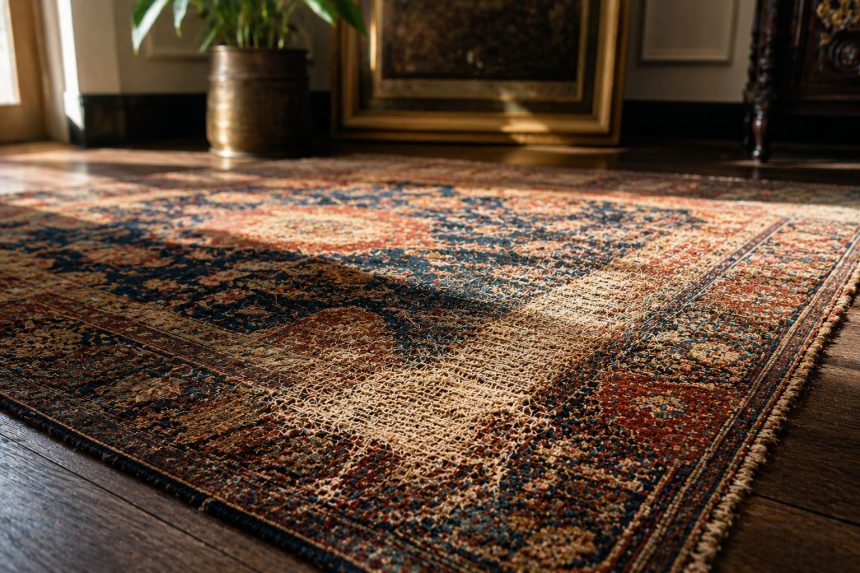
Heavy foot traffic is well-known to cause carpet ageing.
However, a unique combination of local environmental conditions, lifestyle habits, and improper maintenance routines is also drastically shortening the lifespan of natural and synthetic floor coverings across the borough.
Here’s exactly why rugs in Guildford residences are exhibiting faster visible signs of physical wear, pile flattening, and fibre degradation than expected, and what you can do about it to mitigate these effects.
The Local Factors Accelerating Fibre Degradation
To understand why floor coverings in Surrey deteriorate rapidly, one must examine the region’s distinct geological landscape.
Guildford is uniquely positioned where the chalk ridge of the North Downs intersects the sandy soils of the Greensand Ridge and the heavy clays of the Wey Valley.
Residents who enjoy outdoor activities around Pewley Down and Stoke Park unknowingly transport fine particles of chalk, sand, and gritty soil into their properties on daily footwear and pet paws.
Unlike soft household dust, chalk and sand particles possess sharp, jagged microscopic edges.
And, when these microscopic mineral grains migrate deep into the base of a rug’s pile, every step taken across the floor acts like sandpaper, slicing through textile fibres at ground level and causing premature shredding and thinning.
Commuter Lifestyles And Heavy Foot Traffic
Guildford is one of the busiest commuter hubs in the South East, with thousands of residents travelling daily to Central London via Guildford station or navigating local commercial corridors. This fast-paced, outdoors-to-indoors lifestyle directly impacts domestic flooring.
Busy households routinely track in road salt, grit, asphalt residues, and damp urban sludge during the autumn and winter months. In high-traffic zones such as hallways, entryways, and main living areas, carpet fibres suffer intense mechanical friction under heavy footwear.
Synthetic materials like polypropylene and nylon begin to melt slightly under friction and crush, losing their original loft, while natural wool fibres break down under the relentless grinding action of trapped soil particles.
The Hard Water Impact And DIY Cleaning
Surrey is renowned for having hard water containing high concentrations of dissolved calcium and magnesium minerals.
While hard water affects home appliances and plumbing, its impact on floor maintenance is frequently overlooked.
When Guildford homeowners attempt to clean spills or scrub stained area rugs using tap water mixed with store-bought detergent, the mineral-rich water reacts with soap molecules to form a sticky residue known as soap scum.
Off-the-shelf carpet sprays often contain high-alkaline surfactants that bind to carpet yarns if not extracted thoroughly with commercial equipment.
This chemical coating creates a magnet for dust and oil, causing freshly cleaned areas to re-soil within weeks and forcing fibres to stiffen, discolour, and matt down permanently.
Indoor Microclimates And Moisture Accumulation
The physical construction and climate conditions inside Surrey homes also contribute significantly to premature rug ageing.
Many older properties in Guildford feature suspended timber floors or solid stone foundations that naturally draw moisture from the ground.
When heavy, dense rugs are laid over these surfaces without adequate ventilation or breathable underlays, ambient humidity becomes trapped beneath the backing.
Concurrently, modern energy-efficiency upgrades, such as double glazing and draft-proofing, reduce natural air turnover inside the home.
This microclimate creates an ideal environment for dust mites to thrive and allows subtle mildew to attack the jute or cotton warp and weft yarns forming the structural core of woven rugs, rendering the backing brittle and susceptible to dry rot.
Recognising Early Signs Of Rug Wear And Damage
Catching rug damage early is essential for preventing permanent textural collapse.
One of the first warning signs is pile distortion, where the tips of the yarns begin to unravel, blossom, or curl sideways instead of standing upright.
Homeowners may also notice shading or persistent dark tracking lines along primary walking routes that do not improve after standard vacuuming.
Fading and dullness of vibrant dyes often indicate a buildup of microscopic soil masking the original lustre of the wool or silk.
In fringe areas, fraying or loosening threads signal that structural tension is breaking down. Identifying these subtle shifts early enables property owners to implement corrective care before the underlying foundational grid suffers irreparable tearing.
Effective Strategies To Protect Surrey Home Rugs
Preventing premature deterioration requires a proactive, multi-layered approach tailored to the local climate and living habits. Establishing a strict shoe-off policy at the front entrance remains the single most effective barrier against abrasive outdoor soils.
Placing high-performance, dual-action doormats both outside and inside exterior entrances catches coarse grit before it enters living areas.
Rotating area rugs by 180 degrees every six months distributes foot traffic evenly across the surface, preventing localised wear tracks near doorways and sofas.
When vacuuming, homeowners should use suction-only attachments on delicate or hand-knotted wool items, avoiding aggressive rotating beater bars that pull and snap natural textile strands.
When Professional Maintenance Becomes Essential
While routine home care removes surface dust, light domestic vacuums lack the airflow velocity and lift required to dislodge deeply embedded mineral grit from the base of high-density weaves.
Over time, dry soil consolidation creates an abrasive mass beneath the pile that slowly shears fibres from within.
Professional deep cleaning uses specialised equipment to flush out these microscopic contaminants safely, without leaving chemical residues or saturating structural backings.
When home vacuuming fails to lift flattened pile or restore colour clarity, exploring expert Guildford carpet cleaning services becomes a necessary step to extend the physical life of valuable floor coverings.
Specialist washing techniques regulate moisture levels, balance pH ratios, and use soft water solutions to restore elasticity and volume to compressed textile fibres.
Conclusion
Now that you better understand the factors that cause faster wear, you can take proactive steps to preserve your precious carpets.
Remember, protecting your rugs not only maintains their beauty and the warmth of your home interior but also ensures they remain durable and resilient for years to come.