RelatedNewsNetwork
  • Home
  • Tech
  • Business
  • Celebrity
  • crypto
  • Education
  • Fashion
  • Health
  • More
    • Entertainment
    • Home Improvement
    • Lifestyle
    • Mind
    • News
    • Planet Earth
    • sport
    • technology
    • The Sciences
  • Home
  • Tech
  • Business
  • Celebrity
  • crypto
  • Education
  • Fashion
  • Health
  • More
    • Entertainment
    • Home Improvement
    • Lifestyle
    • Mind
    • News
    • Planet Earth
    • sport
    • technology
    • The Sciences
Reading: Honeybees Remember Flower Locations Far Better Than Expected
Share
blog

Honeybees Remember Flower Locations Far Better Than Expected

Gabriele Greco
Last updated: November 2, 2026 1:29 pm
Gabriele Greco
Share
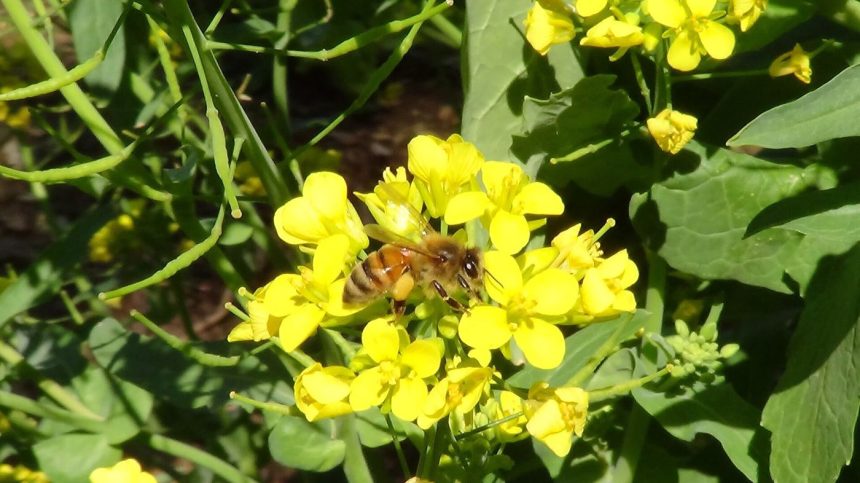
Honeybee collecting nectar on bright yellow flowers
SHARE

A honeybee’s brain is smaller than a sesame seed, yet it performs feats of learning that would challenge far larger animals. Foraging bees memorise the colour, shape, scent and location of rewarding flowers, keep track of the time of day each species produces nectar, and navigate home across kilometres of changing countryside. New research into how bees store these memories is reshaping what scientists thought a miniature brain could do, and it underlines how much farming and wild ecosystems depend on the insects’ mental maps.

Contents
A Memory Built for ForagingWhy It Matters Beyond the HiveProtecting a Remarkable Mind

A Memory Built for Foraging

In controlled experiments, bees learn within a handful of visits which colours predict a sugar reward, and they retain that lesson for days. They also learn patterns and landmarks, using the position of the sun and polarised light as a compass. When a scout finds a rich patch of flowers, she returns to the hive and performs the famous waggle dance, encoding the direction and distance of the food source so nestmates can fly straight to it. The colony, in effect, shares one distributed memory, updated hour by hour as flowers open, empty and refill.

Bees are also surprisingly good with numbers and categories. Studies have shown they can learn to distinguish larger from smaller quantities, recognise symmetrical from asymmetrical patterns, and even grasp the idea of empty set, a concept once thought to require a much bigger brain. Sleep matters too: bees deprived of rest become worse navigators, just as tired humans forget directions, which suggests their memories are consolidated during sleep in a similar way.

Why It Matters Beyond the Hive

Roughly a third of the food people eat depends on pollinators, and honeybees are the most managed of them all. A colony whose foragers remember efficiently spends less energy per trip and pollinates more flowers, so understanding bee cognition has practical value for orchards and farms. It also sharpens concern about pesticides: several common insecticides are known to impair bee learning and memory at doses that do not kill outright, leaving colonies alive but effectively lost. Research groups reporting through outlets such as Nature continue to map how these chemicals interfere with navigation.

Protecting a Remarkable Mind

The practical conclusions are straightforward. Flower-rich margins, hedgerows and gardens give bees the landmarks and varied forage their memories are built to exploit, while careful timing of spraying reduces the chance of poisoning foragers mid-route. For scientists, the bee remains a model of how much computation a tiny brain can achieve. For everyone else, it is a reminder that the insect crossing a garden is not wandering at random: it is following a map it learned, remembered and may soon teach to the rest of its colony.

Farmers and gardeners can help put this research to work. Planting sequences of flowers that bloom from early spring to late autumn gives foragers reliable routes to memorise, and leaving some corners of land unsprayed and unmown preserves the landmarks bees navigate by. Even window boxes and roadside verges contribute when they are consistent from week to week, because a bee’s memory rewards places that pay off repeatedly. The better the landscape supports that memory, the more pollination it returns.


Subscribe to Our Newsletter
Subscribe to our newsletter to get our newest articles instantly!
[mc4wp_form]
TAGGED:honeybeespollinators
Share This Article
Twitter Email Copy Link Print
Previous Article Getting to Know Host Money and Monetization in Live Audio Broadcasting
Next Article DmFirst Game Registration Website – New Account Guide
Leave a comment

Leave a Reply Cancel reply

Your email address will not be published. Required fields are marked *

Search

Recent Posts

A person wearing smart glasses walks through a modern city street.
Smart Glasses Trials Test Hands Free Directions and Translation
technology
Retirement planning documents and notes arranged on a desk.
Retirement Planning Is Moving Earlier as Workers Rethink the Long Game
Business
A person works in focus at a desk while a phone rests nearby.
Notification Batching Helps Workers Stay Focused Longer
Health
A person sleeps peacefully in a dark, quiet bedroom at night.
Consistent Sleep Routines Support Better Mental Health
Health

About Us

RelatedNewsNetwork delivers insightful stories, breaking news, in-depth coverage, and real-time updates on important topics shaping the world.

Bringing relevant, impactful, and timely information that keeps audiences informed. #RelatedNewsNetwork

สล็อต | แทงบอลออนไลน์ | บาคาร่า | ดูบอล | แทงบอลออนไลน์ | หวยออนไลน์ | UFABET168 | ดูบอลออนไลน์ | สล็อต | สล็อต | ufabet | สล็อต | สล็อตเว็บตรง | สล็อตออนไลน์ | Caliente Casino | แทงบอลออนไลน์ | บาคาร่า | ufabet | https://facebook.africa.com/ | สล็อต | สล็อตเว็บตรง | ทางเข้า ufabet | สล็อตเว็บตรง || สล็อตวอเลท | ยูฟ่าเบท | ยูฟ่าเบท | สล็อตวอเลท | แทงบอลโลก | https://keonhacai.mba/ | ทางเข้า ufabet | betflik || เว็บหวยออนไลน์ | 7kbet

Popular Posts

Smart Glasses Trials Test Hands Free Directions and Translation
November 4, 2026
Retirement Planning Is Moving Earlier as Workers Rethink the Long Game
November 3, 2026
Notification Batching Helps Workers Stay Focused Longer
November 1, 2026

Contact Us

We appreciate your feedback! If you have a question, need assistance, or want to connect, feel free to reach out. Our team is always here to help you.

Email: contact@outreachmedia .io
Facebook Page:  Outreach Media
Phone: +92 3055631208

Address:25 Rue de Rivoli, Paris, 75004, France

Copyright © 2026 | All Right Reserved | RelatedNewsNetwork

  • About Us
  • Contact Us
  • Disclaimer
  • Privacy Policy
  • Terms and Conditions
  • Write for Us
  • Sitemap
Reading: Honeybees Remember Flower Locations Far Better Than Expected
Share

WhatsApp us

Welcome Back!

Sign in to your account

Lost your password?