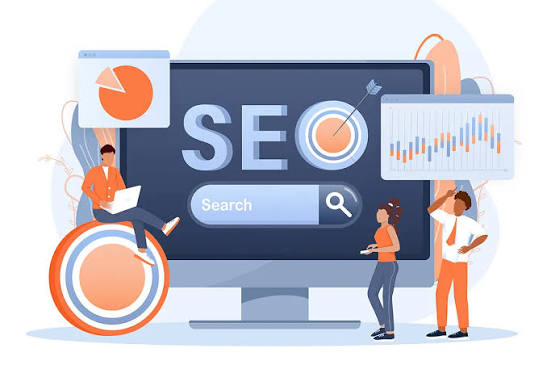
The rules of online visibility have shifted dramatically. Search engines reward relevance, authority, and technical precision—while buyers expect seamless digital experiences before they ever speak to a salesperson. For medium to large businesses, aligning SEO strategy with overall marketing objectives is no longer optional; it is the foundation of sustainable growth.
Why Ecommerce SEO Has Become a Competitive Necessity
Organic search remains one of the highest-converting traffic sources for online retailers. Businesses that invest in ecommerce seo typically see compounding returns over time—unlike paid campaigns that stop the moment the budget runs out.
Effective ecommerce SEO encompasses several disciplines working in tandem:
- Technical site health — crawlability, page speed, structured data markup, and mobile responsiveness
- Keyword architecture — mapping transactional, navigational, and informational intent to the right product and category pages
- Content depth — product descriptions, buyer guides, and comparison pages that address real purchase concerns
- Link authority — earning backlinks from relevant, high-authority domains to signal trustworthiness to search engines
Retailers that neglect any one of these pillars often find that strong rankings in one area are undermined by weaknesses elsewhere.
The Growing Demand for Customized Online Marketing Services
Generic marketing playbooks rarely produce differentiated results. Businesses operating in competitive verticals increasingly seek บริการรับทำการตลาดออนไลน์ that are tailored to their specific industry, customer lifecycle, and revenue targets.
A customized digital marketing approach typically involves:
- Audience segmentation based on behavioral and demographic data
- Multi-channel attribution modeling to understand which touchpoints drive conversions
- Integration of SEO with paid media, email nurture, and social campaigns
- Regular performance reviews tied directly to business KPIs—not vanity metrics
Companies that choose a partner capable of delivering this level of customization tend to outperform competitors who rely on templated, one-size-fits-all strategies.
How AI Is Reshaping Search Optimization
Generative AI tools have changed user search behavior. A growing share of informational queries now begin in AI assistants rather than traditional search engines—and brands that optimize exclusively for conventional ranking signals risk losing visibility in these emerging discovery channels.
This is why forward-thinking agencies now offer รับทำ chatgpt seo, a practice that focuses on making brand content discoverable within AI-generated responses. The goal is to ensure that when a potential customer asks an AI assistant about a product, service, or industry topic, the brand appears as a credible, cited source.
Key tactics within this discipline include:
- Publishing well-structured, fact-rich content that AI models are likely to surface as authoritative
- Building entity presence across the web so AI systems recognize and associate the brand with its core topics
- Maintaining consistent, accurate business information across directories, review platforms, and knowledge bases
Integrating Paid Media With Organic Growth
SEO and paid advertising function most effectively when they inform each other. High-converting paid search keywords can be prioritized in organic content plans, while organically-ranking pages can reduce cost-per-click by improving Quality Scores in paid campaigns.
For brands at the growth stage, a blended strategy prevents over-reliance on either channel. Paid media delivers immediate traffic while SEO builds the long-term asset base—together they create more predictable pipeline performance than either approach in isolation.
Selecting the Right Digital Marketing Partner
The criteria for evaluating a digital marketing agency have evolved. Beyond portfolio and pricing, businesses should assess:
- Vertical expertise — does the agency understand the buyer journey specific to your industry?
- Reporting transparency — are results tied to revenue metrics, or only to traffic and impression counts?
- Technical capability — can the team handle site audits, tag management, and analytics implementation independently?
- AI readiness — is the agency investing in AI-driven SEO and content strategies, or still relying on tactics from five years ago?
Agencies such as Relevant Audience, which operate across SEO, paid media, and emerging AI search channels, represent the type of integrated partner that mid-market and enterprise brands increasingly require.
Common Mistakes That Limit Digital Marketing ROI
Even well-resourced businesses frequently encounter avoidable pitfalls:
- Launching campaigns without clearly defined conversion goals
- Treating SEO as a one-time project rather than an ongoing program
- Failing to align sales and marketing teams on what constitutes a qualified lead
- Ignoring mobile and page experience signals that now carry significant ranking weight
- Underinvesting in content that addresses the middle and bottom of the purchase funnel
Identifying and correcting these gaps early typically yields faster improvements than adding new channels before existing fundamentals are solid.
Conclusion
Businesses that approach digital marketing as a system—where SEO, paid media, AI-driven content, and data analytics reinforce each other—consistently outperform those treating each channel in isolation. The integration of technical SEO best practices, audience-specific messaging, and emerging AI visibility strategies is what separates brands that grow market share from those that simply maintain it.
For organizations ready to build a structured, results-oriented digital presence, more information is available at https://www.relevantaudience.com/
Contact US
Address: 2556, Building 66 Tower, Room.1802,
Floor 18, Sukhumvit Rd, Bangna-Nuea,
Bangna, Bangkok, 10260
Phone: 020385055
Email: [email protected]
Website: https://www.relevantaudience.com/