
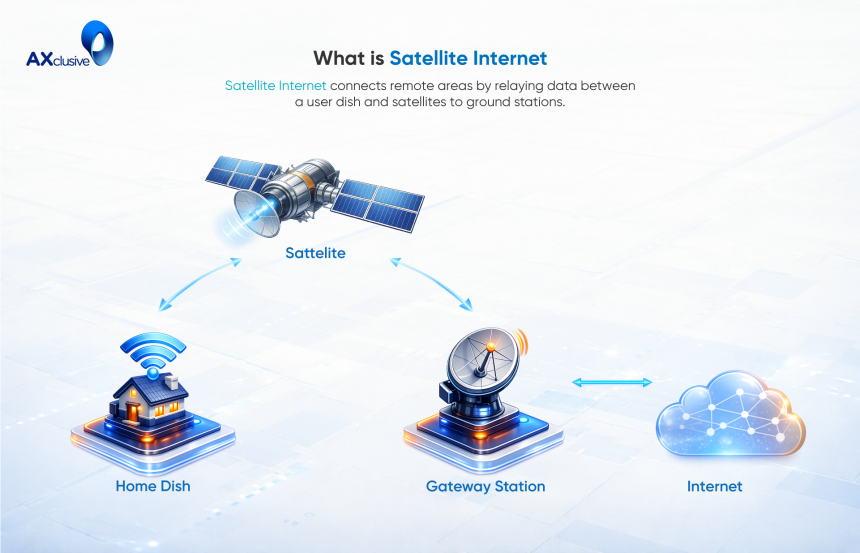
Reliable connectivity is something that modern enterprises cannot compromise on. Whether it’s functionality for remote operations, cloud platforms, automation systems, or digital workflows, they all depend on reliable networks. For enterprises operating in remote areas far from the urban centres, satellite connectivity is often the only viable option.
With the rising demand for continuous, high speed connectivity, the satcom market has evolved quickly. New generation LEO connectivity networks, most notably Starlink, now offer lower latency and higher throughput than traditional satellite systems. Solutions such as Starlink for enterprise are expanding access across industries, including energy, maritime, construction, and government.
For decision makers in these sectors, the question arises whether organisations should purchase satellite internet directly from an operator or work with a managed service provider.
To choose an option, it is important to understand the difference, because the choice affects performance, reliability, security, and long-term costs for your enterprise.
Purchasing Direct Satellite Internet for Enterprises
Direct satellite internet means purchasing connectivity straight from a satellite operator without a managed service layer. Direct subscriptions are usually available as monthly service plans.
In this model, the enterprise typically buys the hardware, installs and configures equipment, manages network performance internally and also handles troubleshooting and maintenance.
In case of an issue, they rely on standard customer support channels
This approach can work well in certain situations, such as small deployments, temporary sites, or organisations with strong internal IT expertise. But direct access also means the enterprise assumes responsibility for network optimisation and operational continuity. Satellite networks are more complex than traditional terrestrial connectivity, and performance depends heavily on configuration and environment.
What Are Managed Satellite Services?
Managed satellite services provide a comprehensive connectivity solution delivered by a specialised provider. Instead of managing infrastructure internally, the organisation receives:
- Hardware supply and installation
- Network configuration and optimisation
- Performance monitoring and analytics
- Security controls
- Integration with existing IT systems
- Ongoing technical support
- Lifecycle maintenance
The difference is simple. The enterprise focuses on its core operations, while the provider manages connectivity. For organisations without in-house satellite expertise, this approach significantly reduces risk and improves reliability.
When Managed Satellite Services Make Strategic Sense?
Managed services are particularly valuable in environments where connectivity directly affects operations or safety.
Common scenarios include:
Remote Industrial Operations
Energy projects, mining sites, offshore platforms, and infrastructure deployments often operate far from land networks. Downtime can stop production and increase costs.
Government and Defence Environments
Public sector agencies need secure, resilient communications with predictable performance. Managed architectures help meet compliance and security requirements.
Business Continuity and Backup Networks
Satellite connectivity is increasingly used as a failover solution for critical infrastructure that needs always-on connectivity. Managed services ensure automatic switching and reliable performance during outages.
Multi-Site Enterprises
Organisations with distributed locations benefit from centralised management, consistent policies, and unified visibility across networks.
Offshore and Mobility Operations
Vessels, mobile units, and temporary sites require specialised deployment and ongoing monitoring. Solutions such as Starlink Maritime and Starlink Land are commonly integrated into managed environments with GEO and L-Band networks.
Mission-Critical Connectivity
Managed services provide stronger assurance in operations where communication downtime affects safety, revenue, or compliance.
Key Differences Between Managed Services and Direct Internet
Before deciding whether to go for direct internet or managed solutions, weigh the varying factors for both.
Deployment and Integration
Direct solutions often involve self-installation or limited vendor guidance. Managed providers deliver professional deployment, network design, and integration with enterprise systems.
For example, organisations adopting Starlink frequently work with authorised partners such as IEC Telecom, which supports installation, optimisation, and advance network management system of satellite internet services.
Performance and Reliability
Direct connections typically operate on a best-effort basis. Performance depends on local configuration and user expertise.
Managed services optimise network settings, prioritise traffic, and implement redundancy where needed. This improves stability and user experience.
Support and Troubleshooting
Direct users rely on standard support queues.
Managed environments include proactive monitoring, faster escalation paths, and dedicated technical assistance. Problems are often identified before users notice them.
Also, managed service providers usually have a strong local presence and expertise which helps resolve issues based on the specific requirements/regulaltions in a region.
Security and Compliance
With direct internet, security responsibility sits entirely with the enterprise.
Managed providers implement segmentation, filtering, monitoring, and policy controls aligned with organisational requirements to address cybersecurity.
Scalability
Scaling direct solutions may require manual upgrades and procurement.
Managed services allow flexible expansion with provider support, which is particularly useful for growing organisations.
The Role of Multi-Orbit and Hybrid Connectivity
Connectivity strategies are evolving beyond single-network dependence. Multi-orbit architecture combines LEO satellites with traditional geostationary systems. Hybrid networks also integrate terrestrial links such as fibre or 5G.
This approach improves resilience as well as performance.
Industry data shows strong momentum. In the satellite IoT sector, LEO networks held roughly 62% market share in 2025 and are forecast to grow at nearly 25% annually through 2035. This rapid adoption is speeding up hybrid deployments as organisations combine LEO performance with wider GEO coverage.
Enterprises increasingly prioritise redundancy over reliance on one network. Managed service environments are well suited to this shift because they enable:
- Automatic failover between links
- Centralised performance monitoring
- Intelligent traffic routing
- Network policy control
Platforms such as OptiView, a proprietary value added service by IEC Telecom for advanced network management, provides real-time visibility across LEO, GEO, and cellular connections.
Features include performance analytics, credit management, cybersecurity controls, and remote configuration from a single interface. This type of orchestration is difficult to achieve with standalone direct connections.
Hidden Costs Enterprises Often Overlook
Direct satellite internet may appear cheaper at first. However, total cost of ownership often includes factors that are not immediately visible.
Key hidden costs include:
Downtime
Connectivity failures can halt operations, delay projects, or interrupt services. The financial impact of downtime may be even more than subscription savings.
IT Staff Workload
Internal teams must manage installation, troubleshooting, and optimisation. This can divert resources from core business priorities.
Installation Errors
Incorrect antenna placement or configuration reduces performance and increases support needs.
Network Optimisation Challenges
Satellite performance depends on environmental conditions, bandwidth management, and traffic prioritisation. Expertise matters.
Equipment Maintenance
Hardware replacement, updates, and repairs require planning and a budget.
Training Requirements
Staff may need specialised knowledge to manage satellite systems effectively. Managed services reduce these risks by transferring responsibility to specialists.
Final Word
Satellite connectivity is no more considered a niche specific application. It is a part of the coe connectivity infrastructure for many industries around the world. The decision between direct internet and managed services is not simply about accessing bandwidth. It is more about operational resilience, security, scalability, and long-term reliability.
Direct procurement may work for smaller or less critical deployments. However, organisations operating in demanding environments often benefit from managed solutions that provide predictability and peace of mind.
As LEO connectivity with Starlink continues to expand and hybrid architectures become standard, enterprises that plan connectivity strategically will be better positioned to operate efficiently in an increasingly digital world.