
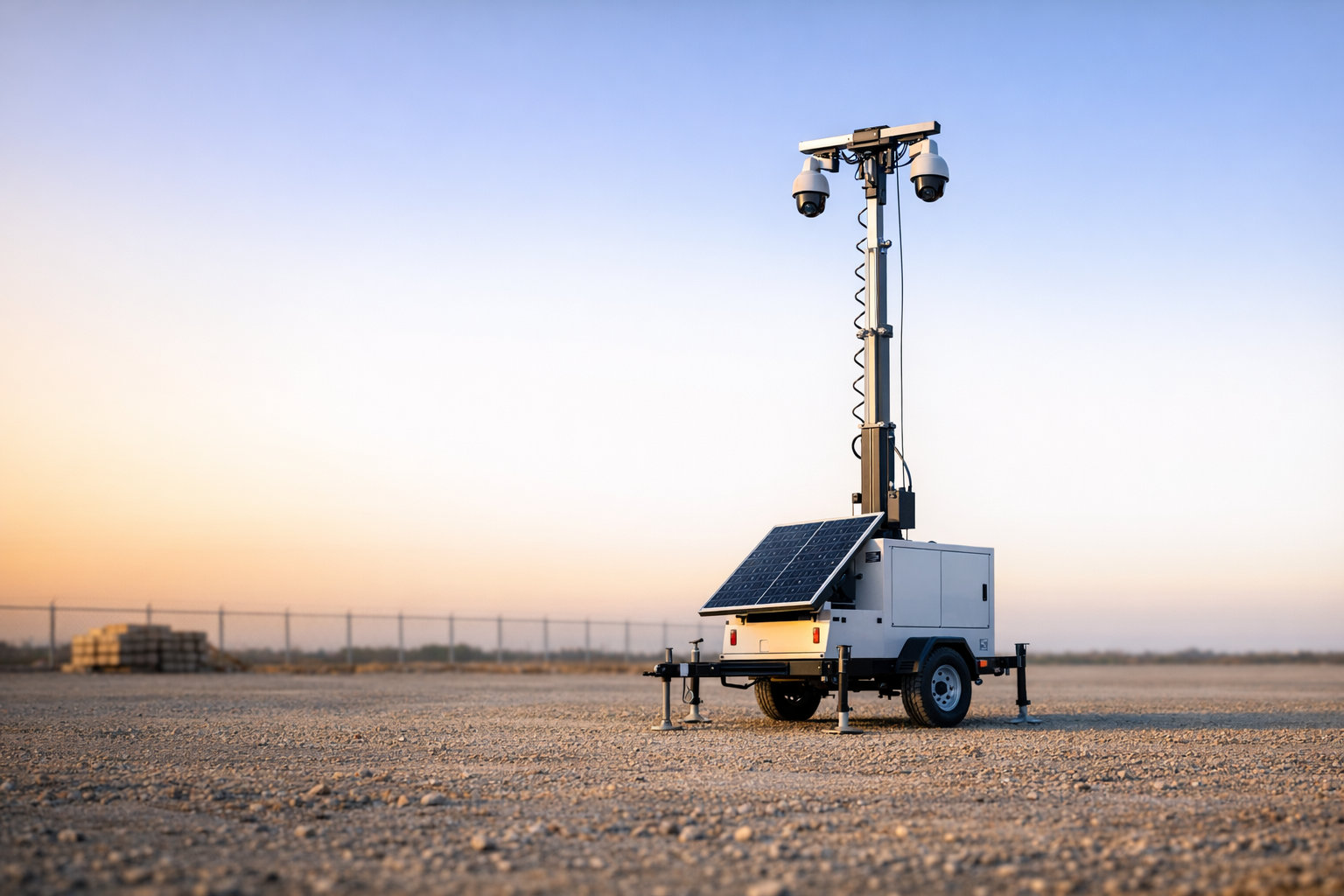
Temporary sites often present weak points in security due to limited infrastructure, frequent changes, and inconsistent monitoring. Recent advances in mobile surveillance equipment offer new options for protecting property and people at these varied locations. Understanding how technology now addresses these challenges equips you to make practical, informed choices for safeguarding assets where permanent measures fall short.
Construction zones, outdoor events, and utility projects face heightened risk because they typically lack robust fences, continuous lighting, or steady on-site security teams. Flexible monitoring tools, like towers with cameras, wireless connectivity, and autonomous power sources, can provide effective oversight in these ever-changing environments. For example, a construction site on the outskirts of a city may store expensive machinery in open areas overnight, making it vulnerable to theft without dedicated monitoring. If you deploy a remote surveillance trailer mid-project, you gain adaptable coverage that responds to dynamic perimeter shifts and after-hours threats. These advances mean temporary locations can now approach fixed-site security standards, bridging infrastructure gaps for greater peace of mind.
Where security challenges emerge at temporary sites
Temporary sites commonly see theft of tools, supplies, and equipment, especially after standard working hours. For instance, crane components or copper wiring left at a construction project often attract thieves when the area is not constantly supervised. Criminals target locations where costly materials are left unattended and assume that fences or basic locks will not offer much resistance.
Unauthorized entry is also frequent, whether by trespassers, vandals, or people seeking shortcuts through the space. Such incursions can cause property damage, disrupt schedules, and expose you to repair costs or delays. At outdoor festivals, for example, intruders have been known to bypass temporary barriers after hours, sometimes leading to vandalized sound equipment or concessions.
Liability risks can increase when accidents happen on unguarded properties. If someone is injured during off-hours, questions about oversight and preventive measures may arise. Utility repair teams performing overnight upgrades near public roads must be especially wary of third parties entering active work zones, which can result in injuries and subsequent liability claims.
Staffing constraints combine with the limits of periodic patrols to leave large areas vulnerable. Regular checks may miss incidents that occur between rounds, making consistent surveillance difficult to achieve. Remote monitoring can help mitigate this issue, but real-time response may still be limited if staff are stretched thin across multiple sites.
Recent advances in adaptable monitoring equipment
Power flexibility has made short-term monitoring more reliable, as battery banks and generator compatibility keep cameras running without direct grid access. For example, an off-grid utility repair project can maintain surveillance throughout the night by using generators and solar-charged battery packs. Enhanced efficiency in camera components reduces demand, allowing units to remain operational for extended stretches.
Upgrades in connectivity, such as networks that prioritize cellular signals and support automatic failover, provide steadier links for remote access. Better uptime monitoring means that any drop in service can be detected quickly, reducing blind spots and downtime. A transportable system at a remote construction site, for instance, can switch between multiple mobile networks to maintain its connection even in rural zones with weaker signals.
Camera performance has also seen notable gains. Higher resolution sensors, improved low-light imaging, wider fields of view, and the introduction of optical zoom all help you observe larger sites with fewer blind spots and sharper detail. This is especially valuable when monitoring crowded event arenas or dimly lit equipment storage yards.
Smart detection algorithms further reduce unnecessary alerts by distinguishing between genuine threats and routine or environmental triggers. This helps prevent false positives caused by weather or animals, allowing you to focus responses on meaningful activity. Construction sites often see false movement from wind-blown materials; modern filters now minimize these unhelpful alerts.
Enhancing remote access and deterrence capabilities
Centralized portals now let you review footage, check system health, and coordinate reactions from a distance, streamlining response to potential incidents. These systems are designed to notify you or a security team promptly, supporting timely interventions when issues are detected. For instance, after-hours activation of alarms when motion is detected outside a fenced-off utility station helps staff respond rapidly, even if the site is unmanned.
Deterrence features, such as integrated lights, can discourage unauthorized entry by alerting would-be trespassers that their presence is being observed. Thoughtful use of such features must balance the need for visibility with avoidance of nuisance effects, particularly in areas near residential properties. A mobile unit positioned near a housing development may use infrared lighting at night to avoid disturbing neighbors while still illuminating trespassers for video auditing.
Mobile surveillance’s value can be maximized by creating clear protocols for how and when deterrence or intervention measures are used. This consistency helps ensure effective, responsible monitoring tailored to each site’s context. For example, at a music festival, established guidelines for alerting security when the perimeter is breached ensure that only significant incidents are escalated.
Developing layered approaches that blend camera coverage with selective lighting or signage achieves more comprehensive control. This can ease pressure on personnel and bring temporary facilities closer to the standards of permanent sites. In some situations, clear warning signage alongside visible camera units has reduced attempted thefts at equipment rental depots.
Planning safe and effective mobile deployments
Careful site assessment is essential to identify critical entry points, high-value zones, and ideal viewing angles. Placement at height improves camera reach, while well-considered locations prevent avoidable obstructions from compromising coverage. Construction managers often install cameras on movable trailer masts to adjust to daily shifts in active work areas.
Respecting privacy is a core principle in temporary surveillance. Avoid situating equipment in ways that could capture neighboring homes or private spaces, focusing only on access routes, boundaries, and communal working areas. This is especially important for outdoor events near residential zones, where privacy concerns are heightened by the temporary setup.
Footage management should be governed by clear policies, restricting access to authorized personnel and keeping records for a reasonable period. Robust audit trails ensure responsible handling and transparency if incidents are later reviewed. A festival operations team, for instance, may limit access to security footage to a designated supervisor and enforce timed deletion after the event concludes.
Thorough documentation practices and regular system checks help you maintain operational credibility. This discipline supports both security goals and privacy-respecting frameworks at the temporary site. Weekly audits and maintenance logs at construction sites are common examples of this approach.
Common use scenarios for modern temporary monitoring
On construction sites, intelligent detection can spot after-hours trespassers and trigger timely responses, lowering the risk of tool or material theft. For example, the detection of an intruder attempting to enter a locked equipment locker allows for rapid dispatch of local security staff. This combination of real-time visibility and quick follow-up discourages repeat offenses and limits losses.
At outdoor events, perimeter surveillance helps maintain controlled access and document any incidents that occur. When staff review footage post-incident, it provides objective records for managing disputes or supporting safety investigations. In practice, security teams at large concerts often replay video to clarify the sequence of events during reported accidents.
For emergency or utility repairs, rapid deployment of a mobile system ensures that equipment is watched over even if the work zone shifts. Quick setup and automatic monitoring are well suited for unpredictable, time-limited tasks. Utility crews called out at short notice often rely on portable surveillance to protect both their vehicles and temporarily exposed infrastructure, such as downed cables awaiting replacement.
Because temporary sites are so diverse, the flexibility of current tools allows you to adapt protection methods as project needs evolve. This responsiveness is central to minimizing disruption and maintaining accountability where fixed measures do not exist.
Addressing limitations and ongoing security risks
Weather and environmental conditions can interfere with camera clarity or equipment stability, particularly during storms or high winds. Strong mounts and weather-resistant casings extend system life but cannot remove all obstacles. An example is a mobile unit at a winter festival experiencing video interference during heavy snow, prompting additional checks and adjustments.
Connectivity blind spots remain a problem in rural or shielded locations. Planning for redundancy using multiple connection types or backup alerts can reduce the risk of surveillance outages. A remote wind farm may deploy additional cellular boosters to maintain camera coverage across wide, open spaces.
Vandalism directed at cameras or power sources requires safeguards like tamper-resistant installations and discreet placements. Even robust hardware must be checked regularly to guard against physical sabotage. Temporary school expansion campuses may conceal camera units within protective casings to deter tampering by students or passersby.
False alarms remain an inevitable factor, making clear response protocols just as important as sophisticated hardware. Reliable outcomes depend on well-trained staff who can distinguish real threats from routine triggers and escalate issues responsibly. In one example, event security teams have designated operators review flagged incidents before informing on-site personnel.
In some situations, mobile surveillance alone may not suffice. Layering camera use with barriers, physical patrols, or thoughtful lighting supports a more integrated approach, particularly where valuable equipment or dense pedestrian traffic is involved.
The latest advances in mobile monitoring help temporary sites approach the security coverage of permanent facilities. With careful planning, site