Precious metals such as gold, silver, platinum, and palladium attract traders because their prices can respond to inflation, economic uncertainty, currency movements, interest rates, and global market sentiment. Understanding trading costs and exposure is therefore essential before entering a position.
A metals trading firm can provide access to spot precious metals through leveraged contracts, but traders need to understand how spreads and leverage affect every trade. Knowing these concepts can help traders evaluate potential costs, manage exposure, and make more informed decisions.
What is a Spread in Precious Metals Trading?
The spread is the difference between the bid price and the ask price of a trading instrument. It represents an important part of the trading cost because a position generally needs to move favorably by enough to overcome the spread before generating a positive return.
For example, suppose gold is quoted with a bid price of $2,400.00 and an ask price of $2,400.20. The difference between these prices is the spread.
Spreads can vary depending on the instrument, account tier, liquidity, market conditions, and trading period. They may also become wider during periods of heightened volatility, major economic announcements, or reduced liquidity.
Understanding this cost is particularly important for short-term traders, as frequent positions can make transaction costs more significant over time.
What Is Leverage in Precious Metals Trading?
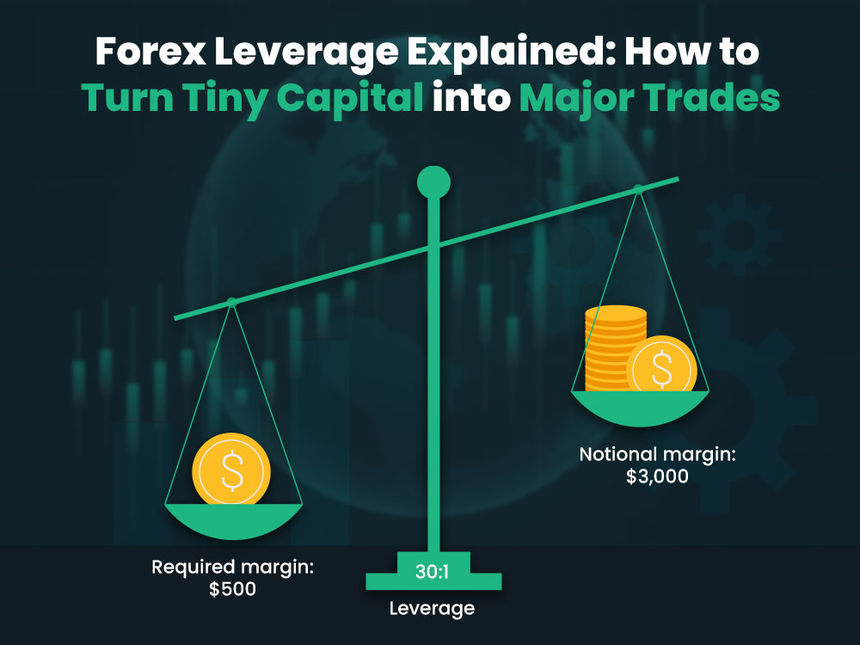
Leverage allows traders to control a larger market position using a smaller amount of capital as margin. It can increase market exposure without requiring the trader to provide the full notional value of the position.
For instance, leverage of 1:100 means that a trader may control a position with a notional value 100 times the margin allocated to it, subject to applicable requirements and suitability.
While leverage can increase the potential impact of favorable price movements, it also magnifies losses. A relatively small movement in the underlying precious metal can therefore have a significant effect on account equity.
This makes leverage one of the most important concepts for anyone considering leveraged metals trading.
How Does Leverage Change Trading Risk?
Consider a simplified example. A trader has $1,000 available as margin and uses leverage to obtain exposure to a substantially larger position.
If the metal moves in the trader’s favor, the percentage return on the allocated margin can be amplified. However, if the market moves against the position, losses can increase just as quickly.
This is why leverage should not be viewed simply as a way to increase potential returns. It is also an exposure-management tool that can increase downside risk.
The available leverage can differ between instruments and account tiers. The published metals schedule shows maximum leverage of up to 1:400 for gold, 1:200 for silver, and 1:100 for platinum and palladium. Actual availability remains subject to applicable suitability requirements.
What Is the Relationship Between Margin and Leverage?
Margin and leverage are closely connected.
Margin is the amount of capital required to maintain a trading position, while leverage determines how much market exposure can be obtained relative to that margin.
Higher leverage generally means a lower margin requirement for a particular position size. However, lower margin requirements do not mean lower risk.
Suppose a trader opens a large position because the required margin is relatively small. A modest adverse price movement could then reduce available account equity significantly.
Understanding this relationship can help traders avoid using excessive position sizes simply because higher leverage is available.
How Can Traders Manage Spread and Leverage Risks?
Effective risk management begins with understanding how much exposure a position creates. Traders researching the best metals company in UAE should look beyond leverage and compare factors such as spreads, available instruments, margin requirements, execution conditions, platform features, and regulatory oversight.
Traders can consider several practices:
Use Appropriate Position Sizes
Position size should be determined by available capital and acceptable risk rather than the maximum leverage offered.
Monitor Market Volatility
Precious metals can react rapidly to economic releases and unexpected global developments. Monitoring market conditions can help traders prepare for potential price swings.
Understand the Trading Costs
Reviewing spreads before entering a position helps traders understand the approximate cost of opening and closing trades.
Avoid Unnecessary Overleveraging
Having access to high leverage does not mean it needs to be used at its maximum level. Conservative exposure can help limit the impact of adverse price movements.
How Does MT5 Support Precious Metals Trading?
MetaTrader 5 provides traders with a unified environment for monitoring markets, analyzing charts, and placing trades. The platform supports access to precious metals alongside other asset classes through a single login.
For traders following gold and silver, charting tools and market monitoring features can help them study price behavior and identify potential trading setups.
A platform alone, however, does not guarantee profitable results. Market analysis, risk controls, and disciplined execution remain essential components of responsible trading.
Why Is Understanding Spreads and Leverage Important?
Spreads and leverage influence two different aspects of a trade. The spread affects the cost of entering and exiting a position, while leverage determines the amount of market exposure that can be created from available margin.
Understanding both concepts allows traders to evaluate positions more realistically. Instead of focusing only on potential price movements, they can also consider transaction costs, margin requirements, volatility, and downside exposure.
For precious metals, this understanding is particularly important because gold, silver, platinum, and palladium can respond quickly to changing market conditions.
Conclusion
Understanding spreads and leverage is fundamental to responsible precious metals trading. Spreads influence transaction costs, while leverage can significantly increase both market exposure and potential losses. Traders should evaluate account conditions, instrument-specific requirements, volatility, and position size before opening a trade. Choosing a regulated metals trading firm with transparent pricing and suitable trading infrastructure can also support a more informed approach to accessing precious-metal markets.
For traders seeking reliable access to global precious metal markets, ANAX Capital provides access to gold, silver, platinum, and palladium through MT5, giving traders a convenient way to explore precious-metal markets from one platform. With multiple account tiers, competitive indicative spreads, flexible leverage subject to suitability, and access to tier-1 liquidity, ANAX Capital supports different trading needs. Its CMA Category 1 regulated framework, segregated client funds, and Dubai-based support further strengthen its trading infrastructure.