Reliable biomedical research depends on reagents that perform consistently from one experiment to the next. Antibodies are particularly important because their specificity directly influences whether researchers accurately detect the protein, cell type, or molecular process they intend to study. Variability in antibody performance can therefore affect experimental interpretation and make findings more difficult to reproduce.
For projects requiring a defined and renewable antibody source, custom monoclonal antibody production services provide a way to develop antibodies around a particular antigen and research application. The resulting monoclonal reagents can support long-term studies in areas ranging from basic protein research to biomarker validation and assay development.
What Makes a Monoclonal Antibody Different?
Antibodies recognize specific molecular features, known as epitopes, on an antigen.
Polyclonal antibody preparations contain multiple antibody populations capable of recognizing different epitopes on the same antigen. Monoclonal antibodies, by contrast, originate from a single antibody-producing clone and therefore have a defined binding specificity.
This distinction gives monoclonal antibodies several useful characteristics:
- Consistent epitope recognition
- Renewable production from established clones
- Greater experimental standardization
- Defined specificity
- Suitability for long-term studies
These properties can be particularly valuable when the same reagent needs to be used across multiple experiments, laboratories, or stages of a research program.
Why Reproducibility Matters in Antibody Research
Reproducibility means that an experiment can be repeated under comparable conditions and produce consistent findings.
Antibodies can introduce variability when their identity, specificity, or performance changes between experiments. A reagent that produces different results across lots may make it difficult to determine whether an observed biological difference is genuine or caused by the antibody itself.
Researchers can improve reproducibility by documenting:
- Antibody identity
- Clone information
- Target antigen
- Experimental concentration
- Incubation conditions
- Validation evidence
- Sample preparation methods
A well-characterized monoclonal antibody provides a more defined starting point for this process.
When Might Researchers Need a Custom Monoclonal Antibody?
Commercial antibody catalogs cover thousands of commonly studied proteins. However, not every research question has an appropriate off-the-shelf reagent.
Custom development may be considered when researchers investigate:
- Newly discovered proteins
- Novel biomarkers
- Rare or understudied targets
- Specific protein domains
- Closely related protein family members
- Uncommon research species
- Proprietary antigens
Researchers may also require an antibody optimized for a particular application when available products do not perform adequately.
The decision to develop a new antibody should begin with the biological question and the intended experiment.
Antigen Design Is the Starting Point
The quality of a monoclonal antibody project depends heavily on antigen selection.
Researchers can use different antigen formats depending on the target and intended application.
Peptide Antigens
Synthetic peptides allow researchers to target a defined sequence within a protein.
They may be useful when a unique region needs to be recognized or when producing the full protein is difficult.
However, antibodies generated against a linear peptide may not always recognize the corresponding region when the native protein is folded.
Recombinant Proteins
Larger recombinant proteins can expose multiple potential epitopes and may better represent aspects of the natural target.
Protein quality and folding become important considerations.
Protein Domains
A selected domain can provide a middle ground between short peptides and complete proteins, particularly when researchers are interested in a specific functional region.
Selecting the antigen format should therefore reflect how the antibody will eventually be used.
How Are Traditional Monoclonal Antibodies Generated?
Hybridoma technology remains a widely recognized approach to monoclonal antibody generation.
The general process begins by immunizing an animal with the selected antigen. B cells producing antibodies against the antigen are subsequently collected and fused with immortal myeloma cells.
This fusion generates hybridoma cells that combine antibody production with the ability to grow continuously under appropriate conditions.
Individual hybridoma clones can then be screened to identify candidates producing antibodies with the desired properties.
A simplified workflow includes:
- Antigen design and preparation
- Immunization
- Collection of antibody-producing cells
- Cell fusion
- Hybridoma selection
- Clone screening
- Subcloning
- Antibody characterization
- Application-specific validation
Each stage can influence the quality of the final reagent.
Screening Is More Than Finding a Binder
A candidate antibody that binds strongly to an antigen is not automatically the best reagent for an experiment.
Researchers may need to distinguish between candidates based on several characteristics.
These can include:
- Binding strength
- Specificity
- Cross-reactivity
- Epitope recognition
- Performance in biological samples
- Compatibility with the intended assay
For example, an antibody may perform strongly in an ELISA using purified antigen but poorly in immunohistochemistry.
Screening strategies should therefore reflect the intended downstream application whenever possible.
Why Application-Specific Validation Matters
Different laboratory techniques present target proteins in different molecular environments.
Western Blot
Proteins are typically separated under denaturing conditions. Antibodies often need to recognize linear epitopes that remain accessible after protein unfolding.
Immunohistochemistry
Fixation and tissue processing can alter protein structure and epitope accessibility. Antibodies need to perform reliably within preserved tissue architecture.
Flow Cytometry
For cell-surface targets, antibodies may need to recognize proteins in a native or near-native conformation on intact cells.
Immunofluorescence
Specificity and cellular localization are important because nonspecific fluorescence can complicate image interpretation.
ELISA
Performance can depend on how the antigen is immobilized and whether the assay uses direct, indirect, sandwich, or other formats.
An antibody should therefore be validated for the experiment in which researchers intend to use it.
Monoclonal Antibodies and Biomarker Research
Modern genomics and proteomics can identify large numbers of molecules associated with disease.
These discoveries often need to be followed by experimental validation at the protein level.
Monoclonal antibodies can help researchers investigate whether a candidate biomarker:
- Is expressed in relevant samples
- Differs between experimental groups
- Appears in specific cell populations
- Changes during disease progression
- Responds to experimental treatment
For tissue biomarkers, antibodies can also provide spatial information about where the target is expressed.
This can help connect large-scale molecular discoveries with observable biological characteristics.
Supporting Long-Term Research Programs
Some biomedical projects continue for years.
During that time, researchers may move from initial target characterization to mechanistic studies, assay development, preclinical experiments, or other applications.
Reagent continuity becomes increasingly important as a project expands.
A monoclonal antibody derived from a defined clone can provide a renewable source that supports repeated production. Appropriate preservation of the clone or its antibody sequence can also reduce dependence on a single physical batch.
This can be particularly useful when experiments need to be repeated after the original antibody preparation has been exhausted.
Sequence Information Adds Another Layer of Security
Modern antibody research increasingly incorporates sequencing into traditional monoclonal workflows.
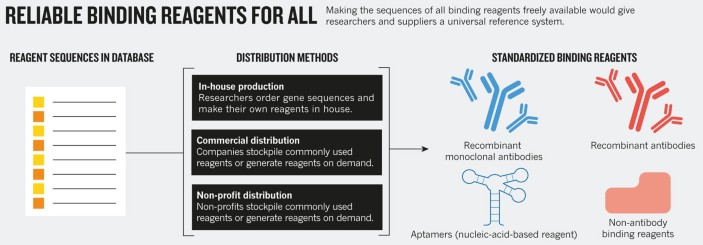
Once the heavy- and light-chain sequences responsible for antibody binding are known, the molecular identity of the antibody can be preserved digitally.
Sequence information may enable:
- Recombinant antibody production
- Long-term antibody preservation
- Antibody engineering
- Isotype modification
- Fragment generation
- Comparison between antibody clones
This creates opportunities to move from hybridoma-dependent production toward sequence-defined recombinant antibodies when appropriate.
Custom Monoclonal Antibodies in Assay Development
A research antibody can also become an important component of a broader experimental assay.
For example, monoclonal antibodies may be incorporated into:
- ELISA systems
- Protein-detection assays
- Immunohistochemistry protocols
- Flow cytometry panels
- Research diagnostic platforms
Assay development introduces additional requirements beyond simple target recognition.
Researchers may need to evaluate sensitivity, specificity, dynamic range, background signal, reproducibility, and performance across relevant sample types.
When two antibodies are used in a sandwich assay, researchers must also determine whether they recognize compatible epitopes.
Reducing Cross-Reactivity
Specificity is particularly important when the target belongs to a family of closely related proteins.
If several proteins share similar sequences, an antibody may bind unintended family members.
Antigen design can help reduce this risk by identifying target regions with lower similarity to related proteins.
Screening can then test candidate antibodies against both the desired target and relevant off-target proteins.
This negative screening step can be just as important as demonstrating positive binding.
An antibody that binds the target strongly but also recognizes several unrelated proteins may have limited value for experiments requiring precise detection.
How Custom Monoclonal Antibody Production Supports Specialized Studies
Research projects can differ substantially in antigen type, species, assay format, and validation requirements.
Using custom monoclonal antibody production services allows the development workflow to be aligned with these project-specific variables rather than relying entirely on a pre-existing reagent.
However, customization alone does not guarantee a successful antibody.
Researchers still need to consider antigen quality, appropriate screening methods, relevant controls, and application-specific validation. Clearly defining these requirements before development begins can improve the likelihood of generating a useful research reagent.
New Technologies Are Expanding Antibody Discovery
Hybridoma technology is no longer the only route to monoclonal antibody discovery.
Researchers can also use approaches such as:
- Single B-cell screening
- Phage display
- Recombinant antibody libraries
- Next-generation sequencing
- High-throughput screening
Computational methods are increasingly being incorporated into antibody research as well.
Sequence analysis and structural modeling can help researchers compare candidates, investigate potential epitopes, and support subsequent engineering.
These technologies expand the range of available strategies, but experimental validation remains essential.
Questions to Ask Before Starting Development
A clear project definition can prevent unnecessary work later.
Researchers should consider questions such as:
- What antigen needs to be recognized?
- Why are existing antibodies insufficient?
- Which species will be studied?
- What assay will use the antibody?
- Does the antibody need to recognize native or denatured protein?
- Are closely related proteins likely to cause cross-reactivity?
- What validation controls are available?
- Will the antibody be needed for long-term research?
- Could recombinant production be required later?
The answers can influence nearly every stage of antibody development.
Looking Ahead
As biomedical research becomes more specialized, reproducibility and reagent identity will remain important considerations.
Monoclonal antibodies offer researchers a defined source of target recognition that can be screened, characterized, preserved, and reproduced for long-term studies. Advances in sequencing and recombinant technologies are further strengthening this advantage by allowing antibody identity to be defined at the molecular level.
Successful antibody development still begins with the research question. Antigen selection, screening, specificity testing, and application validation all need to reflect how the antibody will ultimately be used.
By treating antibody development as part of experimental design rather than simply reagent procurement, researchers can build more reliable tools for studying proteins, validating biomarkers, and answering increasingly complex biological questions.