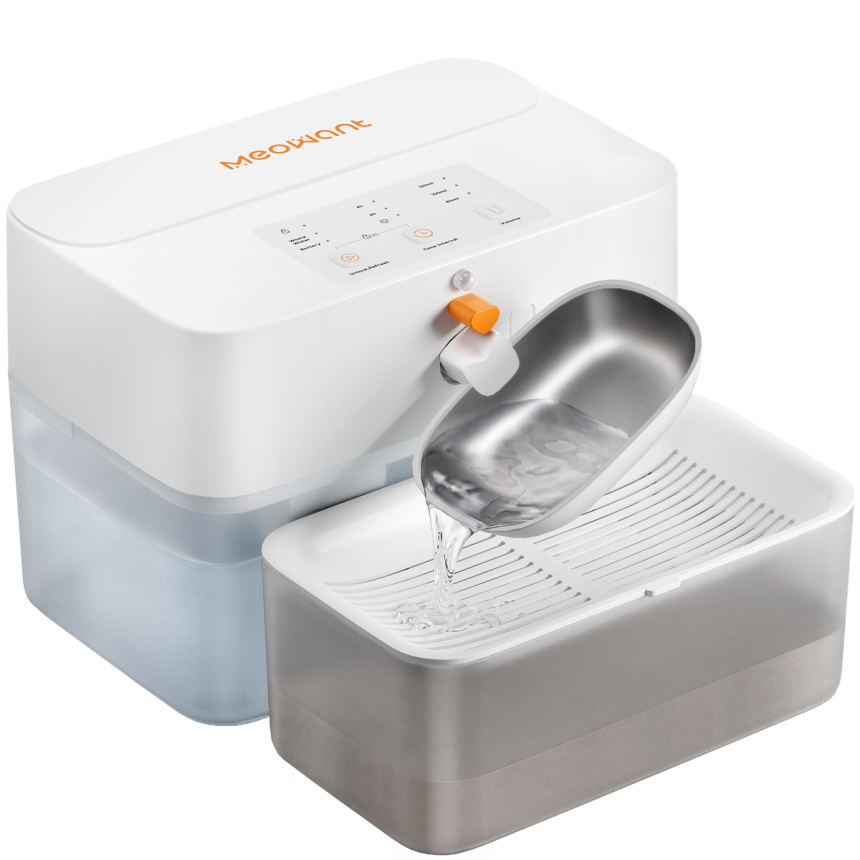
Hydration advice for cats tends to be abstract — drink more water, add moisture to food, watch for dehydration — without explaining how to make any of it happen in a normal household. The complication is that cats are naturally low thirst animals. Their kidneys concentrate urine efficiently, which served wild ancestors well in dry environments but leaves indoor cats vulnerable when they eat dry food and rarely feel a strong drive to drink.
A fountain helps because it changes the water from something a cat tolerates into something a cat seeks out. But a fountain alone does not guarantee intake. Placement, flow rate, cleaning frequency, and household layout all influence whether the unit gets used or ignored. This guide is practical rather than theoretical: how to set up a fountain in single-cat and multi-cat homes, how to encourage a hesitant cat, and how to build a routine that keeps water genuinely fresh day after day.
Understanding What Cats Want From Water
Cats evaluate water with senses we largely ignore. They detect temperature, freshness, and movement long before they taste anything, and each of those signals influences whether they approach a source. A still bowl filled an hour ago and a still bowl filled yesterday are indistinguishable to most owners but very different to a cat.
Movement, temperature, and scent
Flowing water stays cooler through evaporation and picks up oxygen as it moves, which changes its taste and smell. Cats also read motion as evidence that water is not stagnant, which is why so many will ignore a pristine bowl and then drink from a dripping tap. A fountain reproduces that moving surface continuously rather than relying on you to refresh it several times a day.
Why dry food raises the stakes
A cat on dry food takes in very little moisture from meals, so nearly all of its water has to come from drinking. That makes a low intake more consequential than it would be for a cat on wet food, and it is why vets often ask about water sources during routine visits. A weighted possibility: the cat is getting enough, the cat is not, or the cat would drink more if the water were more appealing. Only the third is something you can fix at home, and a fountain targets exactly that.
Choosing a Flow Style Your Cat Will Approach
Not every cat likes every fountain. Some are drawn to a tall cascade and will sit and watch it; others avoid anything that splashes. Before committing to a style, think about how your cat already behaves around water.
Trickle, stream, and bowl-style flow
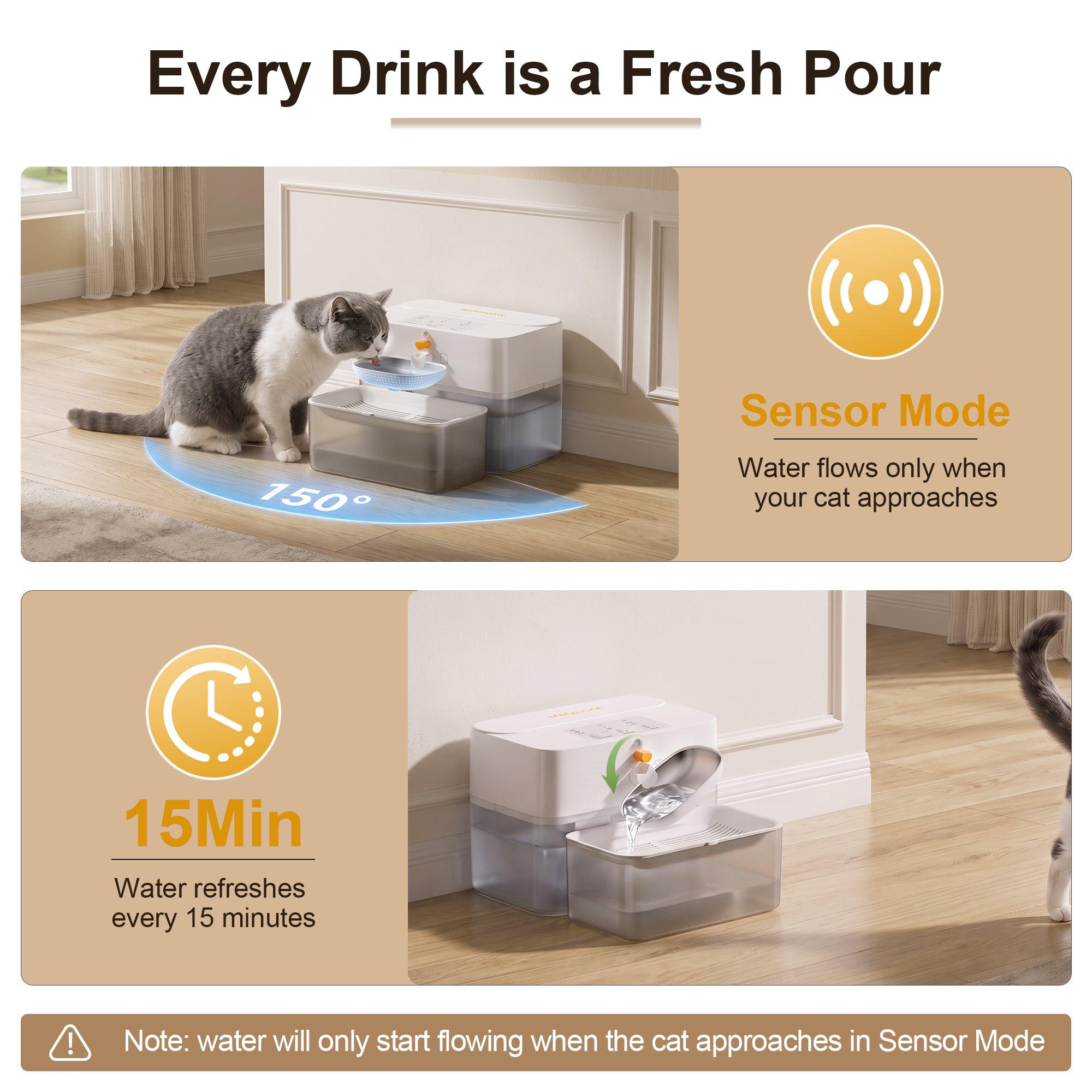
A gentle trickle is the safest starting point for a cat that has never used a fountain, because it keeps most of the water surface calm while adding a small point of movement. A visible stream or cascade suits cats that already show interest in taps or showers. Bowl-style designs with a circulating surface are a middle ground, offering movement without splashing. Many fountains let you adjust the flow, so you can start low and raise it if the cat seems bored with a trickle.
Filters and what they actually remove
A filter is not a substitute for cleaning, but it does real work between washes. A carbon layer absorbs odors and improves taste, while a foam layer traps fur, dust, and food crumbs before they reach the pump. Check that replacement filters are easy to buy and that the housing is simple to open, because a filter you dread changing will be left in too long. Rinse the foam weekly and swap the carbon on schedule; a clogged filter reduces flow, and reduced flow is exactly the condition that puts cats off.
Placement in a Real Household
The best fountain in the wrong spot will underperform a modest fountain in the right one. Placement is about giving cats a calm, separate place to drink, not about aesthetics.
Distance from food and litter
Keep water away from both the food bowl and the litter box. Many cats prefer not to drink next to their food, an instinct linked to avoiding contamination near a kill, and no cat wants to drink beside a toilet area. A separate room or a different wall is usually enough. In a small apartment, put the fountain at the far end of the hallway or in a quiet corner of the living space rather than beside the kitchen bowl.
Multi-cat layouts
In a home with several cats, one water source in one room creates a bottleneck. Place at least two fountains in different locations, ideally with a visual barrier between them so a less confident cat can drink without being watched or displaced. Water intake often rises in multi-cat homes once there is no social pressure around the bowl, so the extra unit frequently does more for hydration than a single larger one.
Encouraging a Cat That Ignores the Fountain
A cat that avoids a new fountain is usually cautious rather than uninterested. The device hums, moves, and occupies new territory, and cats are wired to approach novelty slowly. Give it time and reduce the number of new things competing for attention.
Slow introductions that work
Run the fountain without the cat nearby for an hour so the sound becomes part of the background. Then leave it running with the flow at its lowest setting and walk away. Do not hold the cat near it or splash water to demonstrate. Place a small treat or a toy near the unit so the cat associates the area with something pleasant, and keep the old bowl nearby at first so the cat has a fallback. Most cats begin drinking within a few days once they realize the unit is not a threat.
Troubleshooting refusal
If a cat continues to avoid the fountain after a week, check the noise, the water level, and the lighting. A pump running low on water sounds harsh, and a fountain in a dim corner can seem cave-like to a nervous cat. Move the unit to a brighter, more open spot and confirm the cable is not vibrating against a cabinet. If the cat seems interested but will not drink, try a shallower bowl insert or lower flow. A pet water fountain that mimics a gentle tap rather than a rushing stream is often the version a hesitant cat will accept, which is why adjustable flow is worth prioritizing over decorative features.
Maintenance That Keeps Water Worth Drinking
A fountain is only as good as its upkeep. Biofilm forms on wet surfaces within days, and a slimy basin will send a cat back to the sink. Build a routine that takes minutes, because a routine that feels heavy will be skipped.
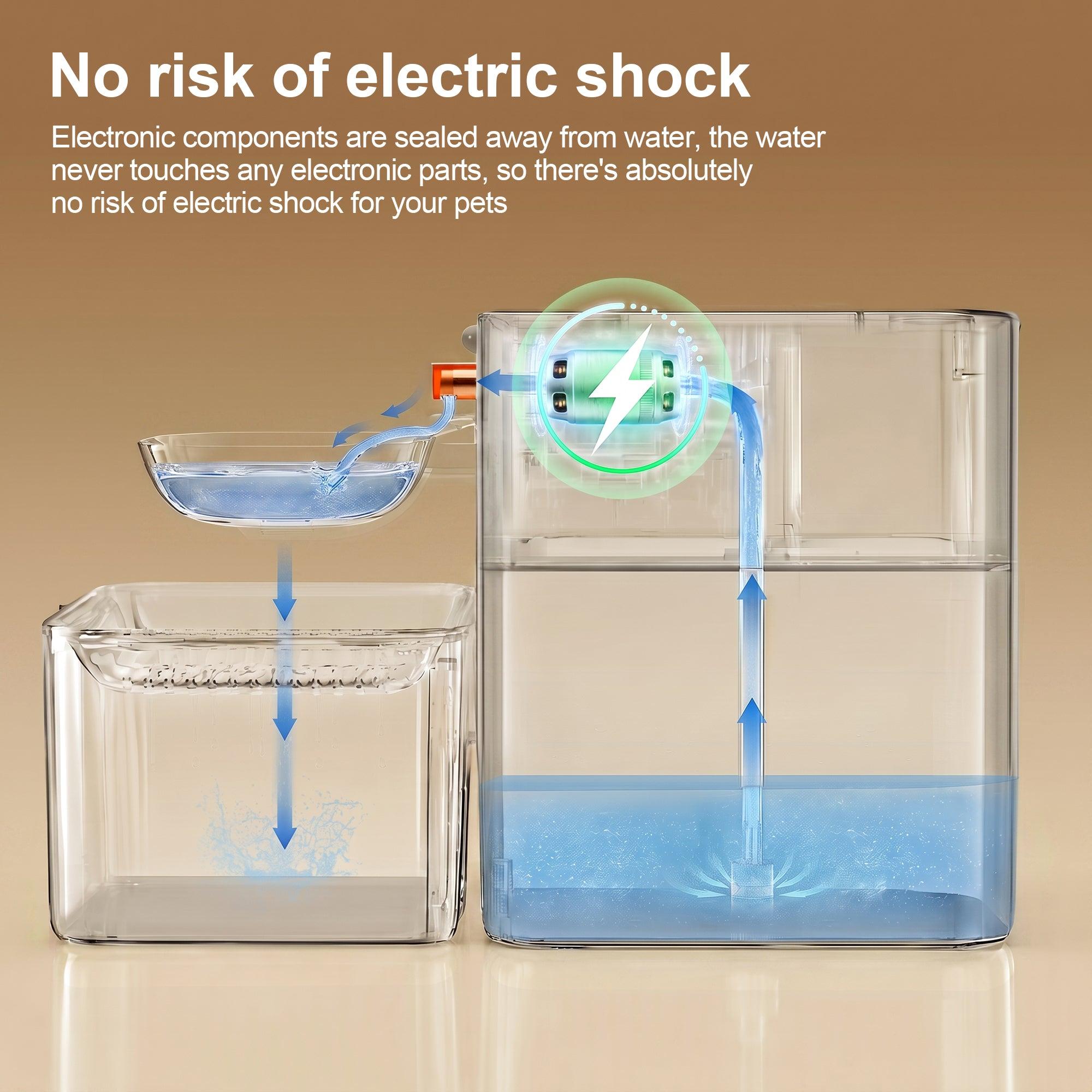
Rinse the basin and refill with fresh water daily. Wipe the interior walls every few days, since that is where biofilm starts. Take the pump apart weekly, remove the impeller cover, and clear hair from the rotor — this single step prevents most noise and flow problems. Every two to four weeks, do a deeper clean with a pet-safe rinse and replace the carbon filter. Watch the water level, especially in warm weather, because a pump that runs dry can overheat.
Track behavior alongside maintenance. A cat that suddenly drinks much more or much less, or that stops using the fountain altogether, may be signaling a health issue that no cleaning schedule will solve. Meowant builds its fountains with removable basins and accessible pumps so the weekly routine stays short, which matters more than any single feature when the goal is water that stays genuinely fresh. Daily rinsing, weekly pump care, and on-time filter changes are what keep a fountain useful instead of decorative.
A Reliable Source of Fresh Water
Hydration for indoor cats is largely a matter of removing reasons not to drink. Freshness, movement, and a calm location do more than any supplement, and a fountain delivers all three continuously if it is placed and maintained well. The setup that works is rarely the most elaborate one — it is a unit that runs quietly, holds enough water for the household, and comes apart easily for cleaning.
Start with a low flow, keep the fountain away from food and litter, add a second source in multi-cat homes, and give a hesitant cat time. Then keep the routine small: daily rinse, weekly pump cleaning, timely filters. Done consistently, that combination turns a cautious cat into a regular drinker and gives you an easy way to support long-term kidney and urinary health.