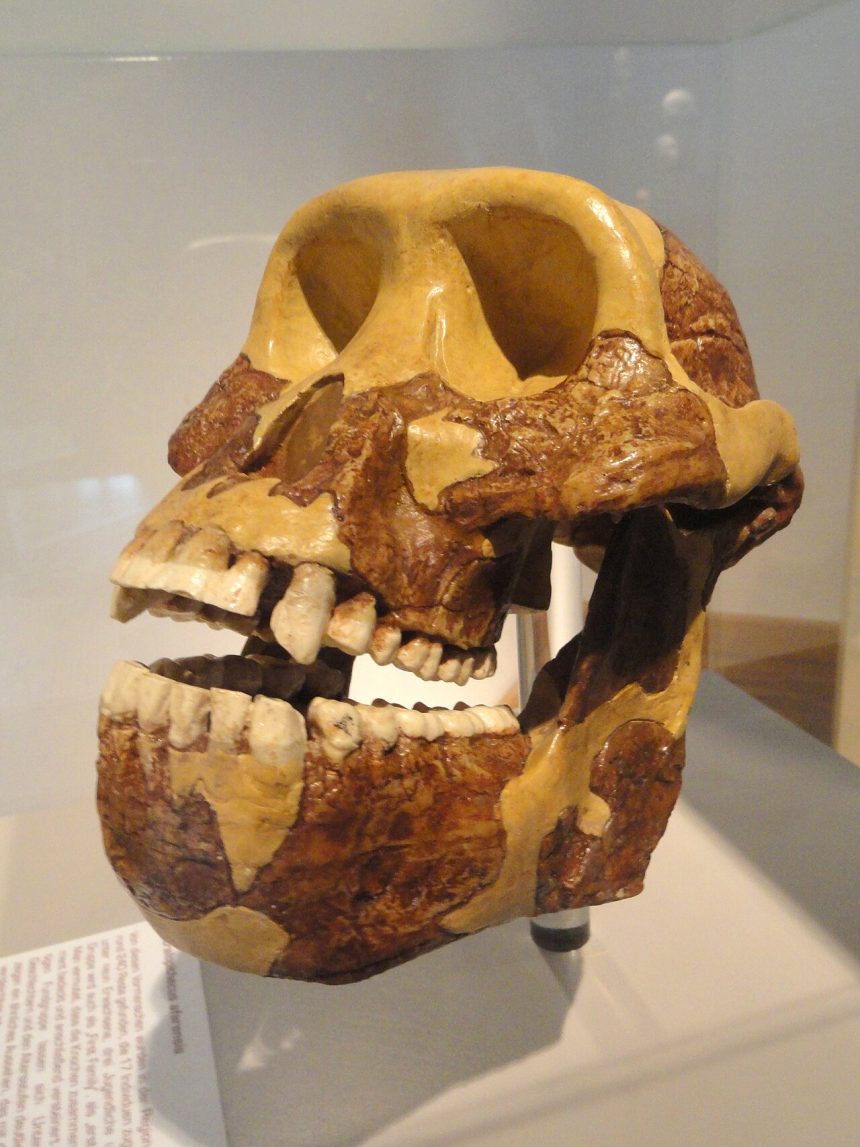
The human brain is the most capable object known to science — and, by several measures, one of the most fragile. No other species suffers schizophrenia, bipolar disorder or Alzheimer’s disease in quite our forms, and no other species’ mind so reliably unravels under stress, sleeplessness or age. A growing body of evolutionary neuroscience argues these are not separate facts. The same adaptations that produced language, planning and self-awareness systematically traded robustness for capability — setting the human brain up, in a real sense, for failure.
The price of an oversized cortex
Evolution expanded the human cortex at extraordinary speed, and speed leaves fingerprints. Our neurons are packed with recently evolved genes expressed at high levels, our synapses remain plastic — changeable — for decades rather than months, and our childhood lasts long enough to wire all of it through experience. Each trait is a vulnerability in disguise. Prolonged plasticity means prolonged exposure to developmental disruption; high metabolic demand — the brain burns about a fifth of our energy — means neurons live permanently near their energetic edge. Research reviewed in journals hosted by Nature Portfolio links recently evolved brain regions and genes disproportionately to neurodevelopmental and psychiatric conditions, as if evolution’s newest work is also its least tested.
Ageing: the bill arrives
Selection is indifferent to what happens after reproduction, and the human brain shows it. The systems that degrade in Alzheimer’s disease — memory circuits in the medial temporal lobe, the default-mode network — overlap strikingly with the systems that expanded most in human evolution and mature latest in development. The “last in, first out” pattern recurs across brain ageing. Our longevity, itself a recent achievement, exposes design margins that evolution never had reason to widen: other primates show partial analogues of our pathologies, but the full human syndromes appear to require the full human brain.
Not design flaws — design trade-offs
Researchers are careful with the word failure. A bridge built to the edge of its load rating is not badly designed; it is optimised under constraint. The brain’s tolerance for noise, its ability to hold contradictory ideas, its hair-trigger social inference — sources of anxiety and rumination — are the same machinery as empathy, creativity and foresight. Even mental illness, from this view, is often the far end of distributions of useful traits rather than alien breakage. Our science desk explores this trade-off framing across conditions from insomnia to depression.
What the perspective changes
Comparative evidence from our closest relatives
The trade-off thesis gains support from the comparison that matters most: other primates. Chimpanzees and macaques show rudimentary versions of some human vulnerabilities — age-related cognitive decline, anxiety-like behaviour, even amyloid deposits — but the full syndromes of schizophrenia, bipolar disorder and Alzheimer’s appear distinctly human in character and prevalence. The differences track the anatomy: the more a brain system was remodelled in our lineage, the more completely its failure modes are ours alone. Language offers the clearest case. No other species pays for fluent syntax with developmental language disorders, stuttering and the thought-disorder of psychosis — yet the genomic studies keep finding the same recently-evolved regulatory machinery on both sides of the ledger, capability and cost, written in the same hand.
If vulnerability is structural, the research agenda shifts: protect the margins. Sleep, metabolic health, hearing, blood pressure and social connection — the factors epidemiology keeps tying to dementia risk — all reduce load on exactly the circuits evolution left exposed. It also reframes stigma. A mind that fails in characteristically human ways is not a defective version of some sturdier animal mind. It is the cost side of the only brain that can wonder why it fails. More neuroscience at our homepage.